
How We Can Help Retailers
As a full-service Top 200 UK Law Firm, we provide comprehensive, sector-specific legal support for retailers.
Our expert retail lawyers offer a comprehensive range of legal services to the retail sector, including:
Our Retail Lawyers
At Myerson, our retail lawyers understand the retail sector and its unique challenges.
Our experience of working with a wide range of retail businesses, from small independent retailers to nationwide chains and franchises, means that we understand the challenges facing retailers.
Our retail solicitors are here to help you grow as a business, and we see our relationship with clients as a long-term partnership.
We also offer support in the retail sector for property owners. Whether you own a portfolio of retail parks or a handful of high street shops, you can feel safe in the knowledge that your investment is being handled by experts.
Myerson Solicitors pride ourselves on our work, and our firm is ranked top tier in the North West by the Independent Legal 500.
Details of some of our retail clients and what they say about us are below.

Who Our Retail Lawyers Can Help
Our retail lawyers advise clients across the sector, from independent retailers and online businesses to national chains, landlords, franchisees, and in-house teams. providing practical, sector-focused legal support on everything from commercial leases and property matters to employment, contracts, IP, and compliance.
- Small independent retailers - dealing with lease negotiations, employment law, supplier/supply chain contracts, and intellectual property issues.
- High street shops and chain stores - managing property portfolios, franchise arrangements, commercial agreements, and compliance matters, including employment law matters.
- Online retailers & mixed-channel businesses (e.g. e-commerce + physical store), needing help with contracts, IP/brand protection, data protection, disputes, logistics agreements, cross-border trade and employment law matters.
- Franchisees and franchisors - drafting, negotiating, enforcing franchise agreements; ensuring brand protection; handling compliance and risk.
- Retail property owners and landlords - owning shopping centres, retail parks, individual shops: lease drafting, lease renewals, rent reviews, break clauses, property litigation, landlord / tenant covenants.
- Business owners undergoing acquisitions, disposals or restructuring - buying or selling retail businesses; handling insolvency, restructuring or redundancy situations; buying competitor or complementary businesses.
- In-house legal teams or to-be legal / compliance heads for retail businesses - with our In-House Counsel team we can support with overflow capacity, specialist advice (e.g. property, employment, IP, litigation), or strategic, sector-specific counsel.
- Retailers facing disputes or litigation - over contracts, supplier or customer issues, landlord-tenant disputes, employment issues, IP infringement, liabilities, and other legal risk areas.
- Those seeking risk/compliance & regulatory support - data protection, consumer law, employment law (especially with shift work & public-facing staff), format changes (e.g., from storefront to mostly online), business rates, and local authority matters.
Why Work With Our Retail Solicitors?
- We are consistently rated as a top-tier law firm by the Legal 500.
- We provide a partner-led service to ensure you receive the very best legal advice and commercially minded support.
- Our full-service law firm operates from a single office, enabling our teams to communicate effectively and efficiently.
- You will receive city-quality legal advice at regional prices.
- Our retail solicitors use the latest technology to ensure that we are working as efficiently as possible and that geographical distance does not prevent us from providing an excellent client service
- You will have access to our free and informative Property Portal to help manage your real estate portfolio.
- Take a look at the Myerson Promise for further benefits of working with us here.

Retail Case Studies
Shareholders in Management Buyout of Retail Business
Client Intro
We acted for a group of long-standing shareholders in a UK-based retail and wholesale business, including founding individuals and senior stakeholders.
Case Overview
We advised the sellers on a management buyout led by members of the existing management team, involving a combination of cash consideration and equity participation.
The transaction was structured through newly incorporated acquisition vehicles and included deferred consideration arrangements linked to future events. It required careful management of the sellers’ interests, particularly in relation to ongoing value and the allocation of risk between the parties.
A key feature of the deal was its interdependency with related property and financing arrangements, requiring close coordination with our real estate and banking teams. We also advised on arrangements between the principal sellers to manage potential post-completion liabilities under the transaction documents.
“Management buyouts require a joined-up approach across legal and commercial considerations. We worked closely with our clients to ensure all elements of the transaction aligned to deliver the right outcome.” – Akeel Latif, Partner, Head of Corporate & Commercial
Employment Matters
Client Intro:
The client is a well-known, national listed retail business
Case Overview:
Our employment team regularly assist this client with various employment-related matters, including:
- senior executive departures and arrivals, including dealing with significant bonus and long-term incentive arrangements;
- union recognition arrangements, negotiating the scope of recognition and resisting recognition in parts of the business; and
- tribunal claims
Fee Earner Comment:
Joanne Evans, an employment law expert at Myerson Solicitors, said:
It is a pleasure to assist such a household name with their complex and strategic employment matters. We understand the challenges of operating in a fast-moving and very competitive retail environment, and we appreciate the trust they place in us to ensure our advice is always tailored to take these challenges into account.
Alleged Design Right Infringement Claim by Amazon
Client Intro:
The client is an independent family-run ecommerce business specialising in various products.
Case Overview:
Our client received a ‘take down’ notice in respect of one of their product listings on Amazon. It was alleged the product infringed the design rights of another company based in China.
Our specialist Commercial Litigation solicitors were able to quickly ascertain that the claim for infringement was spurious, and we prepared a formal response to Amazon disputing the allegations and were successful in ensuring the products were swiftly reinstated., minimising any potential loss and disruption to our client’s business.
Property Portfolio Management for Dulux Decorator Centres
Client Intro: Dulux Decorator Centres, part of Akzo Nobel
Our client manufactures decorative paints, which are sold from over 230 Dulux Decorator Centre stores located across England and Wales.
Case Overview:
Myerson has acted for Dulux Decorator Centres for over ten years. We regularly advise our client on the management of its multi-million-pound rental portfolio.
This includes new leases (often with agreements for lease conditional on landlord and/or tenant works), renewal leases, lease regears, assignments and subleases, licences for alterations and wayleave agreements.
Our Property Litigation team regularly advises the client on lease renewals under the 1954 Act, dilapidation claims, landlord/tenant covenants, rent reviews, and break rights.
Fee Earner Comment:
Sarah McNair, an Associate in the Real Estate team at Myerson Solicitors, said:
As a Myerson client, Akzo Nobel benefits from using our Property Portal and exclusive Client Area, where we securely store all of its deeds and important documents for us and our client to access. This enables Akzo Nobel to manage its portfolio of stores more efficiently and helps to create a seamless working relationship between us and our client.
Grant of a Lease of a Retail Unit to COOK
Client Intro: Dransfield Properties - developers specialised in retail-led regeneration schemes across the UK.
Case Overview:
Our commercial property team acted for Dransfield Properties in securing a new retail tenant at Sanderson Arcade in Morpeth, Northumberland. Ethical frozen food retailer COOK has opened a new store in a former Body Shop unit, further enhancing the retail offering.
Our role included advising on lease agreements and ensuring a smooth transaction that aligned with the objectives of both Dransfield Properties and COOK. With the deal successfully completed, the new COOK store has created 13 jobs and helped boost footfall at Sanderson Arcade.
Fee Earner Comment:
Ian Gordon, Legal Director in the Commercial Property team said:
"We are delighted to have assisted Dransfield Properties in welcoming COOK to Sanderson Arcade. We have worked with Dransfield for many years and understand the complexities of retail lettings, working closely with landlords to secure high-quality tenants that complement their existing retail mix. Dransfield Properties continues to set a benchmark for premium retail destinations, and we are pleased to support them in their ongoing success."
Refinance of Marshall’s Yard
Client Intro
Case Overview
Quote
“We are delighted to have supported Marshalls Yard Limited on this latest refinancing. Having been involved in the site from its inception over 20 years ago, it’s incredibly rewarding to see how it continues to thrive as a model for regeneration.” — Ian Gordon, Legal Director, Real Estate
Successful Application to the Court for Permission to Use a Prohibited Name
Client Intro: Sophie and Thomas Birkert
Our clients are directors of a company trading as Screen With Envy, which hand-designs, crafts, and assembles screens which can be used in homes and gardens.
Case Overview:
After our clients’ original company, Screen With Envy Limited, entered liquidation, our clients purchased the trading name Screen With Envy, along with the company's business and other key assets, from its joint liquidators. As part of this transaction, our clients took professional advice as to the use of the trading name and believed they had properly complied with their legal obligations by giving notice to creditors that they intended to carry on using the trading name Screen With Envy. Unfortunately, due to the precise and narrowly drafted provisions of Section 216 of the Insolvency Act 1986, our clients found themselves inadvertently in breach of those provisions and therefore had to make an application to the court for permission to carry on using the name Screen With Envy. The application to the court was successful.
Fee Earner Comment:
Vicky Biggs, an insolvency law expert at Myerson Solicitors, said:
“Applications under Section 216 of the Insolvency Act 1986 are relatively rare as most directors in a similar position are able to rely on one of the statutory exemptions set out in the Insolvency (England and Wales) Rules 2016 which render an application to the court unnecessary. It was vital that our clients were granted permission from the court to carry on using the trading name Screen With Envy as this name enjoys a significant presence on both social media and in the press and was intrinsic to the ongoing success of their business. It was a pleasure to assist Sophie and Tom with the successful application to the court”.
Pre-Pack Administration Sale of Jewellery Retailer
Client Intro: Begbies Traynor (London) LLP
Our clients are licensed insolvency practitioners based at the UK’s market leader in business rescue and recovery, receiving more corporate insolvency appointments than any other UK insolvency practitioner firm.
Case Overview:
We acted for the joint administrators of Thornrose Limited (a well-known in-store and online high-end jewellery retailer trading as Sean Leane) in relation to:
- Their appointment as joint administrators;
- The provision of advice on various aspects of the administration, to include the registered security held by the secured creditor, as well as advising on a range of issues such as retention of title, the delivery up of goods belonging to the company and the status of the company’s intellectual property rights; and
- The sale of the business and assets of the company as a going concern to a third-party purchaser, to include the preparation of all relevant sale documents. This sale was reported in the press: Buyer found for Shaun Leane as eponymous founder steps down.
Fee Earner Comment:
Richard Wolff, Partner and Head of Insolvency & Restructuring at Myerson Solicitors, said:
“The instructions we received from our clients required, within a short timeframe given the precarious financial position of the company, detailed and specific advice on the security held over the company’s assets, advice on a variety of issues relating to the recovery and sale of the company’s assets and dealing with the sale of the business and assets of the company to a third party, enabling the retail brand to survive and a number of jobs to be secured”.
Introduction To Our Retail Department
Frequently Asked Questions
What are the key legal requirements when hiring staff for a shop or e-commerce business?
When hiring staff, retailers must ensure their recruitment and onboarding processes comply with employment law from the outset.
This includes using fair and non-discriminatory recruitment practices, carrying out right-to-work checks, and providing legally compliant employment terms from day one.
Retailers must also ensure pay, working hours and holiday arrangements meet statutory requirements, including National Minimum Wage obligations and working time rules.
This can be more complex where businesses rely on flexible hours, seasonal workers or hybrid roles common in retail and e-commerce. Employers must also be aware of their obligations in relation to the duty to prevent sexual harassment.
How should retailers handle staff grievances or disciplinary issues?
Retailers are expected to deal with staff grievances and disciplinary issues fairly, consistently and in line with the ACAS Code of Practice.
This generally involves investigating issues properly, giving employees an opportunity to respond, and reaching reasonable, evidence-based decisions.
In the retail sector, these issues can be particularly challenging due to fast-paced environments, high staff turnover, and issues being managed by junior or store-based managers.
Allegations involving customer complaints, misconduct, attendance or disputes between colleagues can quickly escalate if processes are rushed or poorly documented.
If grievances or disciplinary matters are not handled correctly, retailers may face claims for unfair dismissal or discrimination, as well as reputational and employee relations risks.
Our specialist Employment team regularly provide clear and practical advice to employers dealing with grievances and disciplinary matters and can expertly assist retailers at each step of the process.
What are the rules around zero-hours contracts and flexible working requests?
Zero-hours contracts are widely used in retail but still carry legal risk.
Workers remain entitled to key statutory rights, and issues can arise where working patterns become regular or contracts are not properly managed. Retail employees also have a day-one right to request flexible working, which employers must handle through a fair and lawful process.
With the law continuing to evolve in both of these areas, getting this wrong can be costly and can have a negative impact on a company’s reputation and staff morale.
Contact Myerson’s Employment team for practical, sector-specific advice.
How do I choose the right legal structure for my retail business (sole trader, partnership, limited company)?
Choosing the legal structure for a retail business has ongoing ramifications and so careful consideration should be given to the options available. Whilst operating as a sole trader or general partnership (where there are two or more people acting together in business) offers less administrative burdens, establishing a limited company can provide limited liability for shareholders and potential tax benefits. Our retail solicitors have looked at this fundamental decision in more detail in our blog on How to Structure a Retail Business.
What should I check before signing a retail lease?
Entering into a lease is a major commitment, and understanding its key terms and the implications can help protect your retail business.
- Instruct a survey to check the condition of the property.
- Make sure you understand your repair and maintenance obligations under the lease.
- Check whether the rent will increase during the term and on what basis.
- Are there other payments due to the landlord, such as service charges and insurance rent, which need to be factored into your budget?
- Check that the user clause in the lease is suitable for your business and that the use is permitted under planning laws.
- Consider your exit strategy – can you terminate the lease term early or assign the lease to someone else if you decide to relocate or need a bigger store in the future?
You can read more about key considerations before signing a commercial lease.
How can I resolve a dispute with a landlord, supplier, or competitor without going to court?
Under the laws of England and Wales, there are several recognised ways to resolve disputes without issuing court proceedings.
The court actively encourages the use of Alternative Dispute Resolution (ADR), and in some cases may penalise parties who refuse to engage in it. Using methods such as pre-action correspondence and negotiation, mediation, arbitration, adjudication and part 36 offers can save time and costs, preserve relationships and reduce the risk of adverse court consequences. Not only is ADR a practical step but it is expected under the legal framework.
What options are available if a retail business faces insolvency?
There are many formal insolvency options for retail businesses experiencing financial difficulties. They include placing the company into administration, entering into a company voluntary arrangement (CVA), entering into a scheme of arrangement or restructuring plan or placing the company into creditors’ voluntary liquidation (CVL). For more information, please see our blog here: What Insolvency Options are Available For Retail Businesses?
An insolvency practitioner (IP) would need to provide advice as to the appropriate insolvency process. We have excellent working relationships with many national, regional and local independent IPs whom we can recommend and be called upon to provide their professional advice and input.
What steps should be taken when closing an insolvent retail business?
- Once insolvency is likely, do not continue trading unless advised to do so by an insolvency practitioner (IP). Do not pay some creditors over others (as this can lead to preference claims being brought against the directors) and do not sell assets cheaply or move money out of the business. For companies, directors’ duties shift to acting in the best interests of creditors, not shareholders.
- Take professional advice on your personal exposure arising from the closure of the business. This will depend on whether you are a sole trader, partnership or limited company.
- Get an IP involved early. This is essential for insolvent retail businesses. An IP will confirm whether the business is insolvent, advise on the appropriate insolvency process, handle creditors and take control of assets and stock. Simply closing up shop is not acceptable if debts exist.
- Cease trading properly. Retail specific steps will include locking down tills and EPOS, preserving stock and records, stop all sales unless approved by the IP and secure cash, stock and data. Depending on the insolvency process entered into, the IP may authorise the sale of stock or other methods of disposing of stock.
- Retail insolvencies often involve employees. Employees are often made redundant and the business may not be able to afford the redundancy costs. If so, employees can make a claim to the Redundancy Payments Service (RPS) for certain payments. Do not delay or mishandle dismissals as this creates the risk of employment tribunal proceedings.
- Retail leases are often the biggest liability. What happens to the lease will depend on the insolvency process entered into. The IP will decide what to do about the lease. If payments under the lease have been personally guaranteed by the directors or guaranteed by a former tenant then they can still be pursued for any debts/arrears.
- Retail insolvency often impacts customers too. Unused gift cards/vouchers become unsecured creditor claims (meaning it is unlikely the recipients will be able to get their money back), returns and refunds are generally not honoured unless legally required and clear signage should be displayed in the shop and/or on the website once the company enters a formal insolvency process.
Retail and Hospitality Under Pressure: Legal Tools for Survival and Restructuring
Meet Our Retail Solicitors
Home-grown or recruited from national, regional or City firms. Our retail lawyers are experts in their fields and respected by their peers.
Contact Our Retail Team
Complete the form below, or alternatively, you can call Myerson Solicitors on:
01619414000
Latest Myerson Retail Law News

Can a Court Save a Retailer? The TG Jones Judgment Shows the Limits of Restructuring
On 1 July 2026, the High Court approved TG Jones' restructuring plan - but the judge (Mr Justice Hildyard) openly questioned whether the turnaround would succeed. Our Insolvency and Restructuring team explore what the Court’s decision in this case tells us about the current restructuring regime in England and Wales.
Read Blog
Retail and Hospitality: Growing your Local Business
Growing a retail or hospitality business presents exciting opportunities, but it also introduces new legal responsibilities. Whether you are expanding online, recruiting more employees or negotiating commercial premises, taking the right legal steps early can help protect your business and support sustainable growth. In this practical webinar...
Watch Webinar
What Due Diligence Is Required for a Commercial Property Purchase?
Purchasing a commercial property can deliver strong returns, whether through rental income received from tenants or long-term capital growth. It does, however, entail a range of legal and practical risks that, if not addressed and managed before exchange of contracts, can significantly affect the property’s value. Our Commercial Property team...
Read Blog
A Corporate Law Checklist for Founder-Led Retail Businesses in the UK
Running a founder-led retail business in 2026 often means making high-stakes decisions with limited resources while navigating changing costs, shifting consumer demand, and rising regulatory pressure. A solid grasp of core corporate law principles - such as governance, directors’ duties, fundraising, transactions, and ESG – can, however, help you...
Read Blog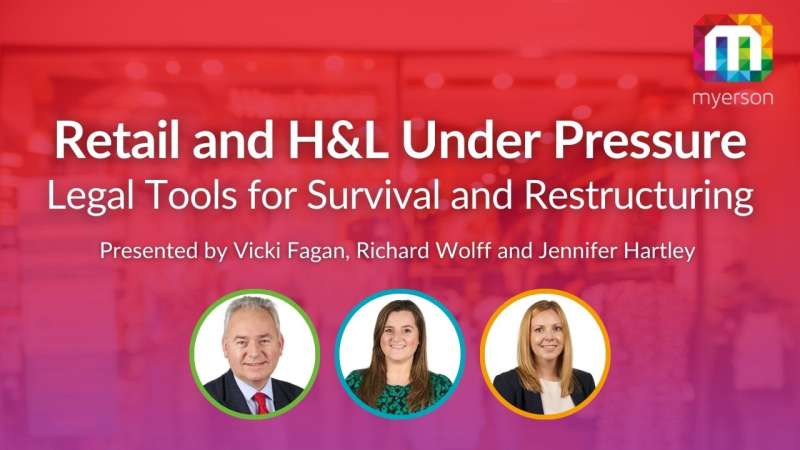
Retail and H&L Under Pressure: Legal Tools for Survival and Restructuring
Rising labour costs, increasing business rates, changing consumer behaviour and sustained inflation are placing significant pressure on the UK retail, hospitality and leisure sectors. In this practical and commercially focused webinar, our specialists in employment law , insolvency and restructuring , and property litigation examine the legal...
Watch Webinar
Commercial Lease Legal Updates 2026: What Retail Tenants Need to Know
As we approach the end of the second month of 2026, we look at some of the changes that retail tenants can expect during the remainder of this year and beyond. From major changes to rent review mechanisms to business rates reforms and stricter energy performance standards, these updates will all impact retailers. It is important to be aware of...
Read Blog