


In the current climate, many farming families are considering ways to diversify their business activities.
In the UK, many new businesses start out as sole traders. It’s quick, cheap, and gives full control. As the business grows over time, the risks and responsibilities become greater.
Remaining as a sole trader may no longer be the best way to structure the business. In such circumstances, consideration should be given to incorporating the new business into a limited company.
Our Agriculture Solicitors explore the business structure options available to farming businesses.
The Difference Between a Sole Trader and a Limited Company
Sole traders are self-employed individuals who run the business in their own name.
The sole trader keeps all the profits but is also personally liable for the liabilities of the business. A sole trader pays income tax on all profits and submits a personal tax return each year.
Limited companies are separate legal entities.
The company enters into contracts, pays its own tax (corporation tax) and its shareholders are only exposed personally to the amount they have contributed in share capital. This principle is called limited liability.
Operating via a limited company does involve more administration, but it is a vehicle which enables more flexibility for matters such as control, management, ownership rights and tax planning as the business and profits grow.
Ownership (shareholders) and management (directors) are separated, whereby the shareholders delegate the day-to-day running of the company to the directors. In many limited companies, the shareholders and the directors can be the same individuals.

Benefits of a Limited Company
Listed below are some of the key reasons why many sole traders make the change.
- Limiting your personal risk: as a sole trader, there’s no legal separation between you and the business. That means if things go wrong, your personal assets (like your home or savings) could be at risk. A limited company gives you some protection, as the business is legally separate from you;
- Ring fencing business activities: it may be advisable to “ring fence” the new business in a limited company, thereby keeping it separate from the farming business, land and assets. If the new business fails, its impact on other business interests will be contained;
- Tax efficiency: sole traders pay income tax on their profits, which can be as high as 45%. Limited companies pay corporation tax (currently 25%), and shareholders can pay themselves through a mix of salary and dividends. Whilst this can result in double taxation, limited companies can offer tax planning flexibility, particularly at higher profit levels. It is important to seek professional tax advice to understand the net benefit in each case;
- Looking more credible: some clients and suppliers prefer to work with limited companies. It can also help to appear more established when applying for funding, entering contracts, or tendering for work;
- Attracting investment: it’s almost impossible to bring in outside investors as a sole trader. If you’re looking to grow and want to issue shares to other family members or outside investors, then a limited company can provide that flexibility; and
- Planning for the future: if the plan is to sell the business in the future or hand it over to a family member, having a limited company structure can make that transition easier.

Timing
When’s the right time to switch? There’s no one-size-fits-all answer, but the following factors may be important in terms of making the decision:
- Profits are increasing, and the sole trader is edging into higher income tax bands;
- The sole trader is starting to take on financial risk, like hiring staff, signing leases, or borrowing money;
- There is a need to build credibility or apply for funding;
- Considering providing a share of the ownership of the business to family members or investors; and
- A more formal structure to support growth is required.

Additional Matters to Consider
- Accountancy and admin: Running a limited company comes with more administration (e.g. maintaining filings at Companies House such as annual accounts, company tax returns and also legal responsibilities as a director).
- Ongoing costs: It’s more expensive to run a limited company (e.g. administration and accountancy fees). Make sure the tax benefits and other advantages outweigh the additional costs.
- Timing: Switching at the start of a new tax year or accounting period often makes the transition cleaner, especially when transferring assets or contracts.
- Professional advice: It’s worth getting tailored professional advice before making the change, and ensure that any transfer of assets to a limited company is fully documented.

Next Steps
Starting a new business as a sole trader makes practical sense for many business owners in the agricultural and rural business sector.
However, as the business becomes more established, the sole trader structure should be reviewed.
If your profits, risks or ambitions are increasing, it could be time to take the next step and set up a limited company.
The change can provide limited liability, save tax and open up new opportunities in terms of collaboration with other family members and investors and may even assist in attracting new customers.

Contact our Agriculture Solicitors
If you're thinking about taking the next step in growing or restructuring your agricultural or rural business, get in touch with our team today to discuss how we can help you make the transition smoothly and in a way that supports your long-term goals.
0161 941 4000
Latest Myerson Agriculture Law News

4
Planning for the Future: Succession in Farming and Rural Businesses
Practical succession planning for farming families, covering business structures, Wills, trusts, land and protecting the future of the farm. Succession in farming is about much more than passing on land. It involves protecting the future of the family, the farming business and the assets that have often been built up over generations.
View Event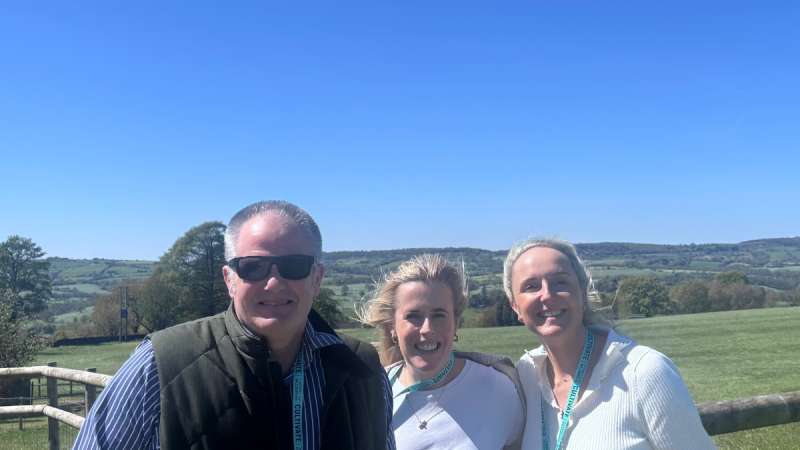
Reflecting on Cultivate 2026: Leading Through Change in the Agricultural Sector
Representatives from Myerson specialist Agricultural team , including Andrew Brown , Nichola Bright , Andrew Stone , Clara Staunton and Chris Wilson were delighted to attend the Lead-In event at Cultivate Conference 2026, held on 29th April in Macclesfield, Cheshire and also to attend the Conference itself which was held on the following day...
Read News
Which Business Structure Is Right for Your Farm or Rural Business?
Whether you are managing 500 acres of arable land, a diversified portfolio of holiday lets and farm shops, or an estate, the vehicle you choose dictates your exposure to risk and your tax legacy. For family farms and rural businesses, the business structure is more than just a legal framework. It is also the focus of planning the business's...
Read Blog
Fair Work Agency and Agricultural Businesses - What Does the Future Hold?
From 7 April 2026, the UK’s new Fair Work Agency (FWA) will begin operating as a single labour market enforcement body. For agricultural businesses, many of which already navigate seasonal labour pressures, visa compliance for foreign workers, and tight economic margins, this marks a regulatory shift which will significantly affect the sector. In...
Read Blog
Myerson Sponsors The Lead-In at Cultivate 2026 Rural Leadership Conference
Myerson is proud to announce that we are sponsoring The Lead-In at the Cultivate 2026 Rural Leadership Conference , the UK’s leading event for ambitious rural professionals, entrepreneurial farmers and future leaders. Taking place on Wednesday 29th April 2026 in Macclesfield, Cultivate has quickly become a flagship conference within the rural and...
Read News
Myerson Magazine Winter 2026 Issue
We’re pleased to share the latest edition of the Myerson Magazine, bringing together timely legal insight, practical guidance and stories from across the firm and our wider community. This issue focuses on significant regulatory changes taking effect in 2026, alongside real-world legal scenarios affecting families, business owners and property...
Read Newsletter
Andrew Brown
Partner & Head of Agriculture Sector
Andrew has over 27 years of experience acting as a Corporate and Commercial solicitor. Andrew is the Head of Myerson’s Agriculture Sector. He has extensive experience in mergers and acquisitions, joint ventures, intellectual property matters, and business restructuring.
About Andrew Brown