

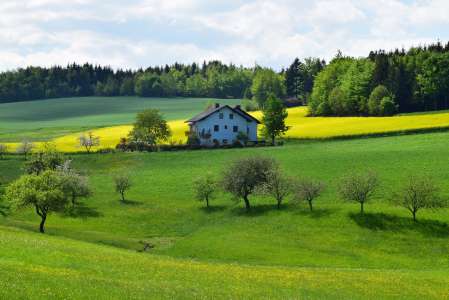
Whether you are managing 500 acres of arable land, a diversified portfolio of holiday lets and farm shops, or an estate, the vehicle you choose dictates your exposure to risk and your tax legacy.
For family farms and rural businesses, the business structure is more than just a legal framework. It is also the focus of planning the business's succession to the next generation.
Below, our Agriculture and Rural Business Lawyers examine the three most common business structures through the lens of current practice in the agricultural and rural business sector.
The Traditional Partnership
A partnership is the simplest and most traditional structure for family businesses and farms.
Under the Partnership Act 1890, a partnership exists wherever two or more people carry on a business in common with a view to profit. It remains the default for many UK farms.
The Upside:
It is inherently flexible and entirely private. There is no requirement to disclose your drawings or balance sheet to the public via Companies House. It also allows for the seamless inclusion of "sleeping" partners (often retired elders). The partners can agree on how profits are shared, who makes decisions and how capital is contributed.
The Risk:
Each partner is personally liable for the business's debts. If the business is sued or fails, creditors can go after the farmhouse and personal savings of any partner.
The Downside:
Higher Tax Rates. Partners are taxed as self-employed individuals, meaning income tax rates up to 45% can apply.
The Legal Essential:
Never rely on the 1890 Act. You must have a written Partnership Agreement. Without one, the law assumes equal profit sharing. This can be a disaster if one sibling does 90% of the work while another has moved away, leading to a difficult and expensive dispute to resolve.

Limited Liability Partnership (LLP)
An LLP offers the operational flexibility of a partnership and the limited liability protection of a company.
The Upside:
The members of the LLP are not typically subject to personal liability. If the business fails, the members' personal assets (outside their capital contribution) are generally protected. Also, an LLP is "tax transparent", meaning members are taxed as individuals, avoiding the potential double-taxation of companies.
The Downside:
The annual accounts of an LLP must be filed at Companies House and become public record. Although LLPs are tax transparent, LLPs do not benefit from lower corporation tax rates, which can make them less tax‑efficient for retaining profits or reinvesting in the business.
The Strategic Fit:
Excellent for diversified estates with multiple commercial arms (e.g., a farm shop and a renewable energy project) where liability risks are higher but flexible internal arrangements are still required. LLPs allow bespoke arrangements for profit sharing, decision‑making and capital contributions. Such arrangements make LLPs a good fit for multi‑generational family businesses.
Private Limited Company
The private limited company is becoming increasingly popular in the agricultural sector for its tax efficiency and its advantages in respect of succession planning.
A limited company is a separate legal person. In a company, ownership (i.e. the shareholders) is separated from management (i.e. the directors).
The shareholders delegate the day-to-day running of the company to the board of directors. A company can be a strong option for businesses seeking growth, investment, or integrated succession planning.
The Upside:
Profits are subject to Corporation Tax. Corporation Tax rates are significantly lower than the higher-rate Income Tax. A company is therefore ideal if you want to keep profits inside the business to buy new machinery or land rather than drawing them out. A limited company also provides limited liability to its shareholders. The personal assets of shareholders are generally protected and the liability of shareholders is usually restricted to unpaid share capital.
Succession Planning:
It is often easier to gift shares in a company to the next generation than it is to carve up physical land or partnership interests amongst family members. Different classes of shares can be created allowing parents to retain voting control while passing on economic value to the next generation.
The Downside:
Administrative "red tape" is high. Directors face strict legal duties, there are required to make annual filings at Companies House and extracting cash can be tax-heavy if not managed by a specialist accountant.

Comparison at a glance
Type of Structure |
Liability |
Taxation |
Privacy |
Succession |
Best for… |
|---|---|---|---|---|---|
Partnership |
Unlimited (Personal assets at risk) |
Income Tax on profits (up to 45%) |
High (Private) |
Works well with a written agreement, otherwise uncertain |
Small family farms |
LLP |
Limited to investment |
Income Tax on profits (up to 45%) |
Low (Public Filing) |
Flexible, memberships can be transferred |
Diversified estates |
Limited Company |
Limited to share capital |
Corporation Tax (19-25%) |
Low (Public Filing) |
Shares can be gifted or transferred, useful for long term planning |
High profit and growth businesses |
Which structure is right for your business?
There is no one‑size‑fits‑all answer. The right structure depends on:
- the level of risk in the business
- how profits are used or extracted
- long‑term succession plans
- the number of family members involved
- the need for privacy compared with transparency
- tax efficiency and reinvestment strategy
Many family businesses operate successfully as partnerships or LLPs for decades, while others convert to a company to facilitate succession or growth.

How Myerson can help
Restructuring a business or putting the right framework in place is essential for protecting family wealth and ensuring long‑term stability.
Our specialist solicitors advise on:
- partnership agreements
- LLP formation and members’ agreements
- incorporation of businesses and company constitutions
- succession planning and share structures
- family governance arrangements

Contact Our Agriculture Team
At Myerson Solicitors, our Agriculture team works closely with landowners, farmers and business owners to ensure their structure is fit for purpose - both now and for the future.
If you would like tailored advice on whether a partnership, LLP or limited company is right for you, get in touch with our team today.
0161 941 4000
Latest Myerson Agriculture Law News

4
Planning for the Future: Succession in Farming and Rural Businesses
Practical succession planning for farming families, covering business structures, Wills, trusts, land and protecting the future of the farm. Succession in farming is about much more than passing on land. It involves protecting the future of the family, the farming business and the assets that have often been built up over generations.
View Event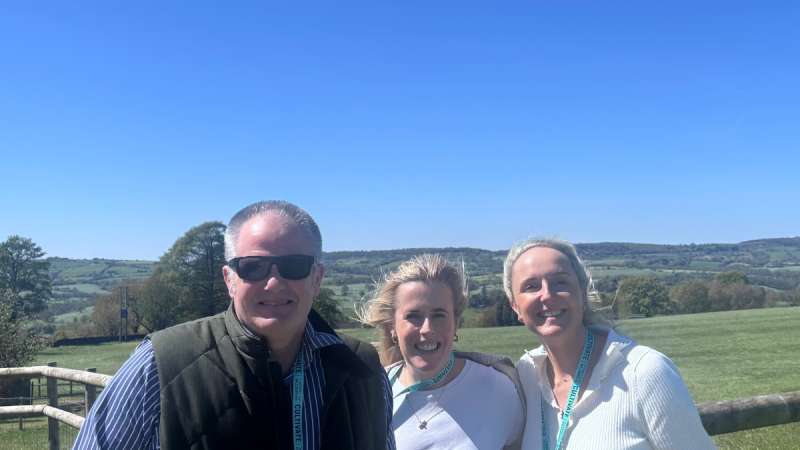
Reflecting on Cultivate 2026: Leading Through Change in the Agricultural Sector
Representatives from Myerson specialist Agricultural team , including Andrew Brown , Nichola Bright , Andrew Stone , Clara Staunton and Chris Wilson were delighted to attend the Lead-In event at Cultivate Conference 2026, held on 29th April in Macclesfield, Cheshire and also to attend the Conference itself which was held on the following day...
Read News
Which Business Structure Is Right for Your Farm or Rural Business?
Whether you are managing 500 acres of arable land, a diversified portfolio of holiday lets and farm shops, or an estate, the vehicle you choose dictates your exposure to risk and your tax legacy. For family farms and rural businesses, the business structure is more than just a legal framework. It is also the focus of planning the business's...
Read Blog
Fair Work Agency and Agricultural Businesses - What Does the Future Hold?
From 7 April 2026, the UK’s new Fair Work Agency (FWA) will begin operating as a single labour market enforcement body. For agricultural businesses, many of which already navigate seasonal labour pressures, visa compliance for foreign workers, and tight economic margins, this marks a regulatory shift which will significantly affect the sector. In...
Read Blog
Myerson Sponsors The Lead-In at Cultivate 2026 Rural Leadership Conference
Myerson is proud to announce that we are sponsoring The Lead-In at the Cultivate 2026 Rural Leadership Conference , the UK’s leading event for ambitious rural professionals, entrepreneurial farmers and future leaders. Taking place on Wednesday 29th April 2026 in Macclesfield, Cultivate has quickly become a flagship conference within the rural and...
Read News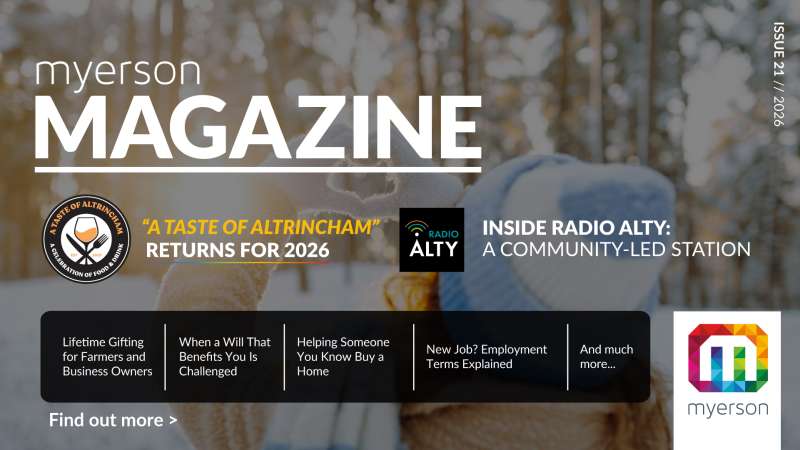
Myerson Magazine Winter 2026 Issue
We’re pleased to share the latest edition of the Myerson Magazine, bringing together timely legal insight, practical guidance and stories from across the firm and our wider community. This issue focuses on significant regulatory changes taking effect in 2026, alongside real-world legal scenarios affecting families, business owners and property...
Read Newsletter
Olivia Rollinson
Solicitor
Olivia is a corporate solicitor specialising in all aspects of corporate law, advising companies, directors and shareholders on a wide range of commercial matters. She graduated from BPP University with a distinction in both the Graduate Diploma in Law (GDL) and the Legal Practice Course (LPC), before completing a two-year training contract gaining broad experience across multiple practice areas.
Since qualifying, Olivia has advised on mergers and acquisitions, share schemes, loan agreements, corporate reorganisations and succession planning, regularly working alongside tax advisers and accountants. She also drafts and negotiates shareholders’ agreements and advises on corporate governance, delivering clear, practical and commercially focused advice tailored to each client’s objectives.
About Olivia Rollinson