


Every year, charities across England and Wales benefit from legacies left by individuals who wish to support causes that mattered to them during their lifetime.
According to the Legacy Giving Report 2026 by Smee & Ford and Legacy Futures, 43,485 charitable estates cleared probate during 2025, just over 17% of all estates at probate.
Across the UK, gifts in wills were worth an estimated £4.4bn to good causes in 2025, with residual gifts averaging £98,000.
In addition to creating a lasting legacy, charitable gifts can also provide valuable inheritance tax advantages.
However, where a substantial charitable donation comes as a surprise, represents a significant departure from a previous will, or leaves close family members with little or no provision, questions may arise as to whether the gift truly reflects the deceased’s wishes.
Disputes over wills are also on the rise.
In 2025, a record 1,217 disputed probate cases were filed at the High Court in England and Wales, the highest annual total on record and a 12.7% rise on 2024.
Charities are not immune from this trend.
They may be contested where there is evidence that the will is invalid, that the gift does not reflect the testator's true intentions, or that the will fails to make reasonable financial provision for an eligible claimant.
Can a charitable gift in a will be challenged?
A charitable gift may be challenged on the same grounds as any other provision in a will.
Depending on the circumstances, a challenge may concern:
- the validity of the entire will;
- the validity of the particular charitable gift;
- the meaning or effect of the wording used;
- whether the testator’s estate should instead make financial provision for an eligible family member or dependant; or
- whether the intended charity existed or can be identified.
In every case, there must be a recognised legal basis for challenging the will or seeking provision from the estate.

What are the grounds for challenging a charitable gift?
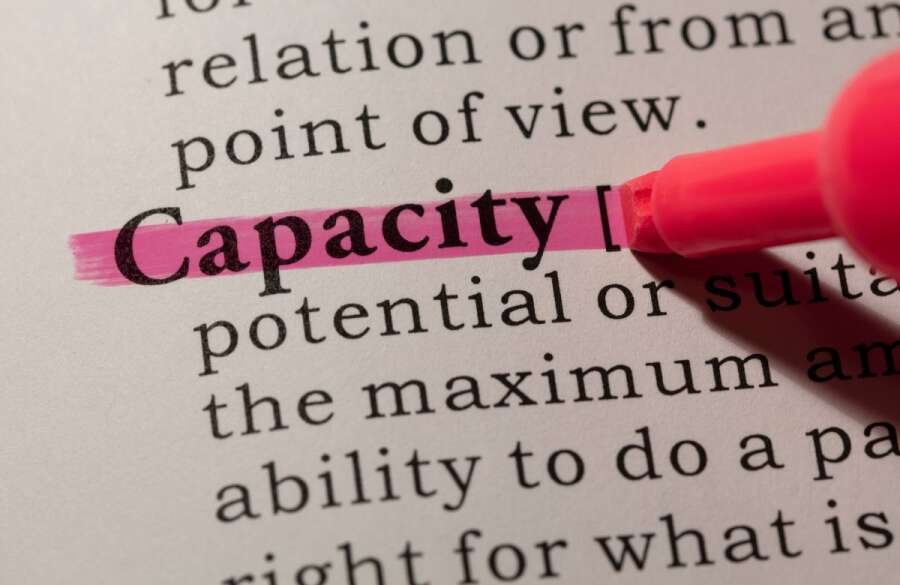
Lack of testamentary capacity
The testator must have had sufficient mental capacity when giving instructions for and executing the will.
Broadly, the testator must have understood:
- that they were making a will and its effect;
- the general nature and value of their estate;
- the people or organisations who might reasonably expect to benefit; and
- that no disorder of the mind affected their decisions about how to distribute the estate.
A capacity dispute may arise where the testator had dementia, cognitive impairment, a serious illness or another condition affecting their decision-making.
However, a diagnosis alone does not establish that the will is invalid.
Testamentary capacity is assessed at the relevant time and by reference to the evidence.
Relevant evidence may include:
- the solicitor’s will file;
- medical records;
- evidence from the witnesses to the will;
- evidence from family members, carers and friends;
- correspondence and earlier wills; and
- the circumstances in which the charity came to the testator’s attention.
2. Lack of knowledge and approval
A testator must know and approve the contents of their will.
This means that they must understand the provisions and accept them as reflecting their wishes.
Concerns may arise if:
- the charitable gift was introduced shortly before death;
- the gift represented a substantial departure from previous wills;
- the testator had difficulty reading or understanding the document;
- another person arranged the will and was involved in giving instructions;
- the testator mistakenly believed that the will contained different provisions; or
- the circumstances surrounding the preparation or execution of the will were suspicious.
An unusual or unexpected gift does not automatically prove a lack of knowledge and approval.
The court will examine the preparation of the will and the available evidence as a whole.

3. Undue influence
A will may be invalid if the testator was coerced into making a charitable gift.
In this context, undue influence requires more than persuasion, encouragement or an appeal to the testator’s emotions. The pressure must have overpowered the testator’s free will.
Allegations of undue influence are serious and must be supported by evidence. Potential warning signs can include:
- the testator being vulnerable, isolated or dependent on another person;
- persistent pressure to make or increase a gift;
- attempts to exclude family members or advisers from contact with the testator;
- secrecy surrounding the new will; or
- a sudden and unexplained change from a longstanding testamentary plan.
Legitimate fundraising or contact between a charity and a supporter does not, without more, amount to undue influence.

4. Fraud or forgery
A will or charitable gift may be challenged where there is evidence of fraud or forgery.
Examples include:
- a forged signature;
- false representations that caused the testator to exclude another beneficiary;
- substitution or alteration of pages;
- dishonesty about the identity or status of the intended charity; or
- deliberate concealment of the testator’s true instructions.
Fraud and forgery allegations require careful investigation.
Expert handwriting evidence may be necessary where the authenticity of a signature is disputed which can be costly and difficult to obtain.

5. Failure to comply with the execution requirements
Under section 9 of the Wills Act 1837, a will must:
- be in writing;
- be signed by the testator, or by another person in the testator’s presence and at their direction;
- be signed with the intention of giving effect to the will;
- have the testator’s signature made or acknowledged in the presence of two witnesses present at the same time; and
- be signed or acknowledged by each witness in the testator’s presence.
If these requirements were not met, the will would be invalid.
The estate would then pass under an earlier valid will or, if there is no earlier will, under the intestacy rules.

6. Mistake, ambiguity or drafting error
A dispute may arise because the will inaccurately records the testator’s intentions or because the description of the charity is unclear.
For example:
- the charity’s name may have changed;
- the will may use an incorrect charity number;
- more than one organisation may match the description;
- the intended charity may have merged or ceased operating; or
- the will may contain a drafting or clerical error affecting the gift.
The court may be asked to interpret the will or rectify it so that it reflects the testator’s intentions.
A rectification claim will require evidence of a clerical error or a failure to understand the testator’s instructions.
Strict time limits apply to rectification claims which is that court proceedings must be issued within six months of the date of the grant of representation. Early advice and investigation is therefore important.

7. A claim for reasonable financial provision
An eligible person may be able to bring a claim under the Inheritance (Provision for Family and Dependants) Act 1975 if the will (or the intestacy rules, where there is no will) does not make reasonable financial provision for them.
Those who may be eligible include:
- a spouse or civil partner;
- a former spouse or civil partner who has not remarried or entered a new civil partnership;
- a person who lived with the deceased as if they were spouses or civil partners for the two years immediately before the death;
- a child of the deceased, including an adult child;
- a person treated by the deceased as a child of the family; and
- a person who was being maintained wholly or partly by the deceased immediately before the death.

A successful claim does not invalidate the charitable gift or the will.
Instead, the court may vary the distribution of the estate by ordering financial provision for the claimant. If this order is made, it can ultimately reduce the amount passing to the charity.
The court considers a range of factors, including:
- the claimant’s financial resources and needs;
- the resources and needs of the beneficiaries;
- the deceased’s obligations and responsibilities;
- the size and nature of the estate;
- any physical or mental disability;
- the relationship between the deceased and the parties; and
- any other relevant conduct or circumstances.
A claim under the 1975 Act must generally be issued with the court within six months of the grant of representation.
The court can permit a late claim, but permission is discretionary and should not be assumed.
Again, early advice should always be obtained to protect a claimant’s interests.
What happens if the named charity no longer exists?
A gift does not necessarily fail because the named charity has closed, merged, changed its name or transferred its activities.
The outcome will depend on factors such as:
- the wording of the will;
- whether the charity existed when the will was made or when the testator died;
- whether another charity is its legal successor;
- whether the gift was intended for the organisation itself or for its general charitable purposes; and
- whether the gift can be applied cy-près, meaning as near as reasonably possible to the testator’s original charitable purpose.
The Charity Commission’s records, the register of charity mergers and the relevant charity’s governing documents may assist in determining the correct recipient.

What evidence should be obtained?
A person considering a challenge should preserve and obtain relevant evidence promptly.
This may include:
- the latest will and any codicils;
- previous wills;
- the will-drafting solicitor’s file;
- attendance notes and correspondence;
- medical and care records;
- financial records;
- documents showing the testator’s relationship with the charity;
- evidence from the attesting witnesses;
- evidence from family members, friends and carers; and
- information about the charity’s identity, status or any merger.

Can probate be stopped while the gift is investigated?
Where there is a genuine dispute about the validity of a will, it may be appropriate to enter a caveat at the Probate Registry.
A caveat generally prevents a grant of probate from being issued without notice to the person who entered it.
A caveat lasts for six months but can be renewed. It should not be used simply to delay administration or as a substitute for an inheritance claim where the validity of the will is not disputed.
If a grant has already been issued, other procedural steps may be available. Executors who have notice of a dispute should proceed cautiously before distributing the estate.

What is a charity’s usual position?
Charity trustees have duties to protect and properly manage the charity’s assets.
A legacy due under a will is potentially an asset of the charity, so trustees cannot simply surrender it without considering the charity’s interests and their legal obligations.
At the same time, charities may take part in mediation or negotiate a reasonable settlement where doing so is in the charity’s best interests.
Depending on the terms and circumstances, regulatory authority or approval may be required before a charity enters into a settlement.
This can make disputes involving charitable beneficiaries procedurally different from disputes involving only private individuals.

How can a charitable legacy dispute be resolved?
Many estate disputes are resolved without a final court hearing.
Possible methods include mediation and round table meetings.
A settlement involving a charity must be structured carefully to account for the trustees’ duties, tax consequences and any required regulatory approval.
Where settlement is not possible, the court may determine the validity or interpretation of the will or, in respect of a claim under the Inheritance (Provision for Family and Dependants) Act 1975, decide whether reasonable financial provision should be awarded.

Acting quickly in a charitable legacy dispute
The appropriate first step will depend on whether the dispute concerns the validity of the will, its interpretation, or the financial provision made for a claimant.
It is important to seek advice promptly.
Delay may result in the grant of probate being issued, the estate being distributed, evidence being lost, witnesses becoming unavailable and increased legal costs.

Contact Our Contentious Probate Team
Myerson’s Contentious Probate Lawyers can assist executors, beneficiaries, family members and charities with disputes involving charitable gifts in wills.
For assistance with a disputed charitable legacy, please contact Myerson’s Contentious Probate team.
0161 941 4000
Latest Myerson Contentious Probate News

Can You Challenge a Charity Gift in a Will?
Every year, charities across England and Wales benefit from legacies left by individuals who wish to support causes that mattered to them during their lifetime. According to the Legacy Giving Report 2026 by Smee & Ford and Legacy Futures, 43,485 charitable estates cleared probate during 2025, just over 17% of all estates at probate. Across the...
Read Blog
Myerson Secures Granddaughter’s Inheritance and Removal of Executor in High Court Victory
Myerson has successfully represented a granddaughter in a High Court dispute over her late grandmother’s estate, securing her share of the inheritance and the removal of her uncle as executor. Myerson’s specialist Contentious Probate team acted for the claimant, Miss James, instructing Tomos Rees of 5 Stone Buildings as counsel. The dispute...
Read News
Myerson Magazine Autumn 2026 Issue
Welcome to the latest edition of Myerson Magazine, where we share practical legal advice, expert insights and news from across Myerson Solicitors. In this issue, we cover some of the important legal considerations that arise at different stages of life, from protecting family wealth and planning for the next generation to understanding your...
Read Newsletter
McDaniel v Talbot: Can an Estranged Child Contest a Parent’s Will?
Being left out of a parent’s Will can be particularly difficult where a once-distant relationship has been rebuilt, but the Will still reflects an earlier period of estrangement. For an adult child in this position, the question is not simply whether their exclusion feels unfair, but whether the Will makes reasonable financial provision for their...
Read Blog
Can I Challenge a Will if My Relative Had Dementia?
Discovering that a loved one changed their Will shortly before they died can be upsetting and distressing, particularly where the changes have an adverse effect on those closest. That is particularly true if they had been diagnosed with dementia and the contents of the Will come as a complete surprise. A question we are frequently asked is: "Can...
Read Blog
Myerson Magazine Summer 2026 Issue
We're pleased to share the latest issue of Myerson Magazine, bringing together practical legal insights, updates on significant legislative changes and stories from across the firm. In this Summer edition, our experts explore the legal issues affecting individuals, families, business owners and property investors, from the Renters' Rights Act and...
Read Newsletter
Olivia Shorrock
Associate
Olivia acts on a wide range of disputes, including challenges to will validity, executor disputes, applications for the removal of executors, and both claimant and defendant claims under the Inheritance (Provision for Family and Dependants) Act 1975.
About Olivia Shorrock