


Going through a divorce is inevitably a stressful and uncertain time.
You will likely be concerned about how you will begin living independently, including having independent finances and moving forward on a single income.
There are options available to help ensure you have sufficient income to live an independent lifestyle following divorce, and our Divorce lawyers explore some of these options below.
Child maintenance
If you have children, then child maintenance may be payable by the non-resident parent.
Child maintenance is a contribution to the costs of caring for the children, including food, clothing, and activities.
The amount of child maintenance can be agreed upon between the parties if possible. If you cannot agree on how much child maintenance should be paid, the Child Maintenance Service (CMS) can formally calculate an amount that the non-resident parent must pay.
The CMS have a handy online calculator to see how much you may be expected to pay or receive.
The CMS calculates child maintenance based on a proportion of the non-resident parent’s gross annual income (deducting pension contributions).
It can be reduced depending on how many other children they must support and whether they have overnight stays with the non-resident parent.

Child benefit and state benefits
Child benefit
Child benefit is different to child maintenance.
The government pays child benefit and can only be paid to one person, usually the parent with whom the children live.
You are eligible for child benefit if you are responsible for raising a child under 16 or a child under 20 if the child stays in education or training.
If you are eligible, you will get £25.60 a week for your first child and £16.95 a week for any other children.
If your child’s living arrangements change following a divorce, you can update your living and payment arrangements here.
However, only the person claiming child benefit can report any change in circumstances.
Please note that there is a tax charge if you, or any new partner, earns £60,000 or more a year. You can still claim child benefit, but you will also be subject to the tax charge.
State benefit
You may be eligible for state benefits if you have recently separated and are not currently working.
The government website has a useful benefits calculator and includes detailed information on benefits, including universal credit, personal independence payment, and child and working tax credits.
Council Tax reductions for sole occupants
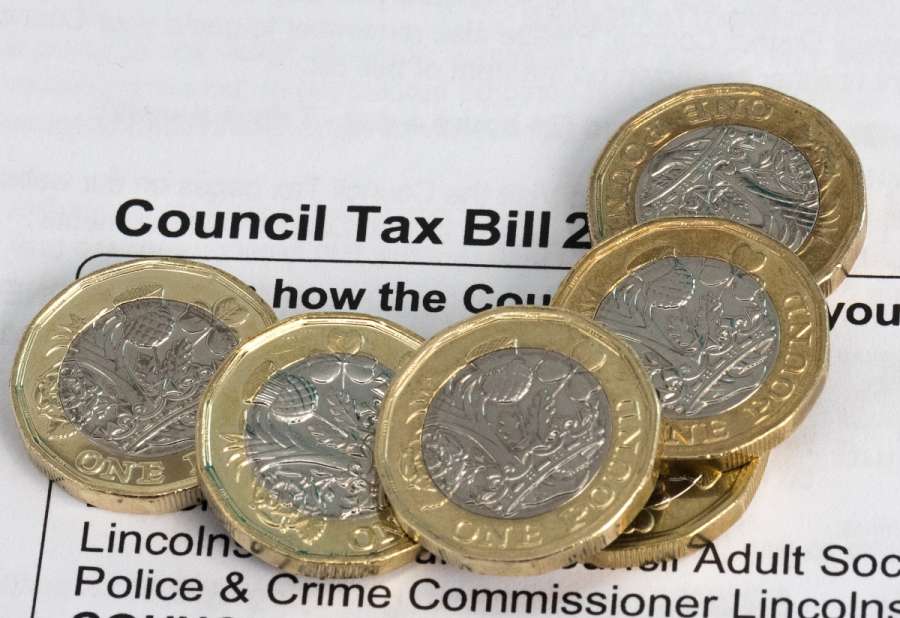
If you are the only adult in your property, you are entitled to a discount on your Council Tax of 25%. You can apply for a Council Tax discount here.
Mortgage reductions
In certain circumstances, agreeing on interest-only mortgage repayments or a mortgage holiday with your lender may be possible.
This can be explored early on to reduce one of your largest outgoings.

Orders following divorce
During divorce proceedings - Interim spousal maintenance
You can apply for interim spousal maintenance during divorce proceedings. These payments can continue until the final divorce order is made.
Following divorce - Periodical payments
Following a divorce, the court can order (or the parties can agree) that one party pay the other periodic maintenance payments.
These payments can continue for however long and on such terms as are specified in the final order.
However, the court prefers that parties reach financial independence as soon as possible following divorce, so this order will only be made where one party has insufficient income.
Following divorce - Lump sum payment
An alternative is that one party pays the other a lump sum.
The recipient can then invest this lump sum to achieve a steady and regular income while rebuilding their life for successful financial independence.
These orders are not guaranteed and will depend on the circumstances of each case and what can be negotiated between the parties and/or ordered by the court.
Further orders can be made and agreed upon during a divorce. If you would like further advice, please speak to one of our specialist family law solicitors.

Help with your legal fees
In addition to readjusting to independent financial living, you will also have the extra cost of legal fees for the divorce. If you cannot afford the legal fees, there are options available to help ease the financial burden:
Legal Services Payment Order
You can make a court application for a Legal Services Payment Order (LSPO) in certain circumstances. If ordered, this would mean that your spouse or civil partner would have to pay your legal fees or contribute to them.
LSPO’s are usually seen as a last resort, and it would have to be shown that you have tried to obtain funds in another way first, such as by borrowing.
Litigation Funding
One way to borrow money to pay your legal fees is through a litigation funding provider.
This is something that can be considered early in your case and even before court proceedings are issued.
At Myerson, we can consider litigation funding with a third-party provider.
These loans carry interest, and the interest on the amount borrowed can be paid by you either monthly or rolled over to the final payment, depending on the provider.
The loan is entirely repayable at the end of the case or within a certain time frame, whichever is the earliest date.
Please note that litigation funding is not available for disputes relating to children unless there are concurrent financial issues and sufficient capital assets available to repay the loan at the end of the case.
This option may not be recommended if limited financial resources are available following the divorce, as the litigation loan will be another amount you will be required to pay.
Contact Our Divorce Solicitors
If you would like any further information regarding financial needs following divorce or separation, please get in touch with a member of our Family Law Team below:
01619414000
More Divorce Advice and News

How Are Businesses Dealt With On Divorce?
The value of a business and its income will be considered an available resource of the marriage on divorce. That is not to say that the family court would order a sale of the business. The court recognises that the business provides an income, the loss of which may have catastrophic consequences. In family court proceedings, the value of a...
Read Blog
How Much Spousal Maintenance Can I Claim On Divorce?
Spousal or civil partner maintenance is also known as a periodical payments order. This is an order that either party to the marriage or civil partnership shall make to the other periodical payments (maintenance) for such term as specified by the order. Whilst there is an expectation in the eyes of the Family Law courts that both parties will...
Read Blog
How are Personal Possessions Dealt with on Divorce?
Divorce is undoubtedly a very stressful time for couples. During the marriage, spouses will have accrued valuable personal possessions, whether purchased jointly, individually, or obtained as a gift, for example, a special piece of jewellery. Couples often worry about how such items will be distributed on divorce, especially as one or both...
Read Blog

What Am I Entitled to if I Divorce My Spouse?
Financial obligations exist between married couples, which do not end automatically once the divorce process is complete. Accordingly, it is important to consider resolving finances on divorce . If the parties can reach an agreement between themselves as to their financial arrangements on divorce, then any agreement reached can be incorporated...
Read Blog
Do I Have To Share My Inheritance In A Divorce?
It is well-known that sorting out the finances on divorce can be a complicated and lengthy process. It involves unravelling financial situations created and intertwined over the course of a marriage, which can span decades in some cases. Often, it is obvious what has built up during the marriage and that the fair outcome is for those assets to be...
Read Blog
10 Steps to Take When Leaving a Relationship
Our Family Solicitors appreciate that separation can be a highly traumatic, emotional, and stressful time. It is important to take control of the situation and seek legal advice at the earliest opportunity. In this blog, we set out the main considerations when starting the separation process and how you can begin the journey to separate...
Read Blog
How Will I Survive Financially After Divorce?
Going through a divorce is inevitably a stressful and uncertain time. You will likely be concerned about how you will begin living independently, including having independent finances and moving forward on a single income. There are options available to help ensure you have sufficient income to live an independent lifestyle following divorce, and...
Read Blog
How to Help Your Children Through Divorce
Separation and divorce can be a challenging and upsetting time for all involved. Even though the relationship between the adults has ended, their role as parents does not stop. It is important to make sure the children get the support they need. Divorce is a process in which children have no choice but to participate. What children are told and...
Read Blog
Can You Divorce Without Sorting Out Finances?
Couples increasingly choose to separate and divorce without having sorted out their finances, which could be attributed to the advent of a more accessible online divorce service, but there are implications for not finalising financial matters by...
Read Blog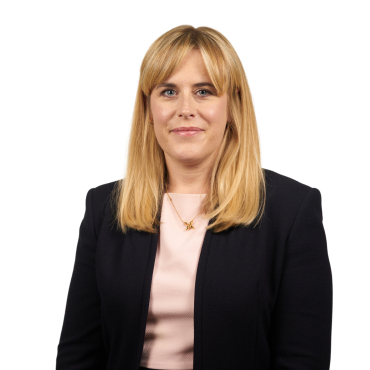
Nichola Bright
Partner and Head of Family
Nichola has over 16 years of experience acting as a Family solicitor. Nichola has specialist expertise in divorce and high net-worth financial settlements, separation, co-habitation, pre-nuptial agreements, complex disputes regarding children, fertility law and surrogacy law.
About Nichola Bright