


In September 2024, Myerson was the first law firm in Greater Manchester to move to an Employee Ownership Trust and is one of only a small number of law firms in the UK operating under this model.
Two years on, becoming employee-owned continues to be a long-term commitment to our people, culture, and sustainable growth.
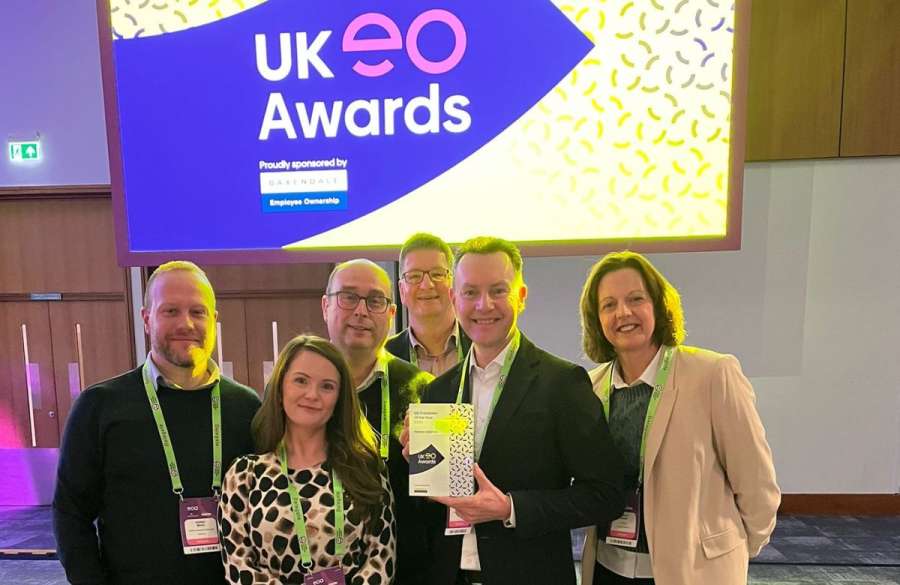
Myerson proudly won “Transition of the Year” at the UK Employee Ownership Awards 2025.
This award, hosted by the Employee Ownership Association, recognises exceptional commitment, vision and impact in adopting more inclusive forms of business ownership.
For businesses considering employee ownership, the transition itself is only one part of the journey.
It is also important to think about how the structure will work in practice once the transaction has been completed, including how employees will be engaged, how their voices will be heard, and how governance arrangements will support the long-term success of the business.
Employee councils
Although there is no legal requirement to have an employee council, forum, or committee, many employee-owned businesses, including Myerson, choose to do so.
It can help to ensure effective communication and support a sustainable engagement culture, contributing to an employee-owned business’s continued growth and success.
At Myerson, our Employee Engagement Committee provides a platform to support our continued commitment to maintaining the firm’s culture. It aims to strengthen communications, enhance staff engagement, and enable employees to share ideas and contribute towards the continued improvement of the firm.
Our committee comprises employees from different teams and job levels across the firm, helping to ensure diverse and inclusive representation of the workplace.
For businesses establishing a council, forum or committee, there are several practical points to consider.
Members should understand its role and purpose, and once selected, it may be helpful to provide them with training and support, for example, on preparing for meetings, gathering and sharing feedback, and asking questions to seek information.
In summary, an effective council, forum, or committee requires:
- a clear purpose;
- an accountable lead;
- organisational support;
- relevant representation; and
- clear communication around employee owners’ rights, roles and responsibilities.
At Myerson, initiatives arising from our own Employee Engagement Committee have included Tiny Triumphs, designed to recognise and celebrate the small wins that happen across the firm, employee quarterly check-ins with supervisors, and a buddy scheme for new employees.
These types of arrangements are worth considering as part of the wider transition process. Establishing an EOT changes a business's ownership structure, but ensuring employees understand and engage with that structure is an important part of making employee ownership work in practice.
Looking beyond the transaction
Our own experience has reinforced that becoming employee owned is not simply a legal transaction.
Businesses also need to think about what employee ownership will look like once the documents have been signed:
- How employees will understand the model
- How their views will be represented
- How trustees and the board will work together and how the business will maintain the culture and values that made employee ownership attractive in the first place
Thinking about these issues early can help businesses put structures in place that support the EOT from the outset.

Supporting businesses through employee ownership
At Myerson, we provide full-service legal advice to employee-owned businesses and companies transitioning to employee ownership, supporting them before, during, and after the transition.
Our advice can include the structure and implementation of the EOT transaction, corporate and tax considerations, trustee and governance arrangements, employment matters, and the practical issues that arise as an employee-owned business develops.
As a 100% employee-owned law firm in the North West, recognised as ‘Transition of the Year’ at the UK Employee Ownership Awards 2025, we bring first-hand experience alongside legal expertise.
Two years into our own employee ownership journey, that experience continues to inform how we advise clients.
Becoming employee-owned is a long-term commitment to people, culture, and sustainable growth, and the most successful transitions are those that consider not only how to complete the transaction, but how the model will work for the business in the years that follow.

Contact Our EOT Lawyers
If you are considering transitioning your business to employee ownership or are already employee-owned and reviewing your governance or engagement arrangements, our EOT Lawyers can support you at every stage.
0161 941 4000
Latest EOT News and Events

Beyond the EOT Transaction: Two Years of Employee Ownership at Myerson
In September 2024, Myerson was the first law firm in Greater Manchester to move to an Employee Ownership Trust and is one of only a small number of law firms in the UK operating under this model. Two years on, becoming employee-owned continues to be a long-term commitment to our people, culture, and sustainable growth. Myerson proudly won...
Read Blog
Are Employee Ownership Trusts Still Worth Considering After the 2025 Capital Gains Tax Changes?
In the highly anticipated 2025 Budget, Chancellor Rachel Reeves reported that the Capital Gains Tax (CGT) relief available to selling shareholders on a transfer of shares to an Employee Ownership Trust (EOT) has cost the Treasury far more than anticipated when the relief was introduced in 2014. As a result, and without trialling it, the 100% CGT...
Read Blog
EOT Disputes: What Happens When Employee Ownership Goes Wrong?
Employee Ownership Trusts (EOTs) offer a great succession route for selling shareholders and can offer long-term business stability, but they are not always smooth sailing. EOT Disputes can arise for a variety of reasons, including disagreements over the valuation of the company at the date of the transaction, disagreements over the governance of...
Read Blog
UK Budget 2025: Announcement Round-Up & Expert Analysis
Rachel Reeves has just delivered her second Budget since becoming Chancellor. However, the build-up to the statement was unusual this year. Many measures were announced in advance, and a large portion of the details were revealed early by accident when the Office for Budget Responsibility mistakenly published its forecast. Despite the early...
Read Blog
Budget 2025: Capital Gains Tax Relief Changes For Employee Ownership Trusts
Yesterday, Chancellor Rachel Reeves delivered the much-anticipated Budget and announced that, with effect from 26 November 2025, the Capital Gains Tax ( CGT ) relief available to selling shareholders on disposal of their shares in a company to an Employee Ownership Trust ( EOT ) is to be reduced from 100% to 50% . Our EOT Lawyers examine the...
Read Blog
Who Are The Trustees of an EOT?
Transitioning to an Employee Ownership Trust (EOT) structure is a significant step for any business. It involves not only the transfer of shares but also the appointment of trustees who are tasked with safeguarding the long-term success of the trust for the benefit of employees. Understanding the role, duties, and best practices of EOT trustees...
Read Blog
Joanne Henderson
Partner
Joanne has over 25 years of experience acting as an Employment solicitor. Joanne has specialist expertise in executive terminations and settlement agreements, compliance matters, and Employment Tribunal claims.
About Joanne Henderson