

Employee Ownership in Action: Giving Our People a Voice at Myerson
As Employee Ownership Day 2026 approaches, 2,824 employee-owned businesses and 541,971 employee-owners across the United Kingdom will come together to celebrate a model built on shared success, making it the perfect opportunity to reflect on what employee ownership means in practice.
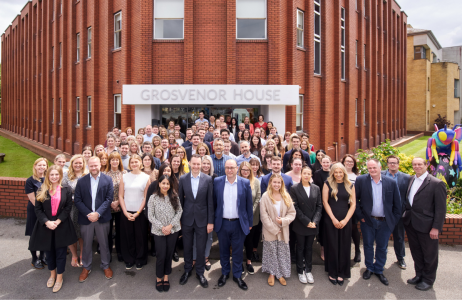
At Myerson, becoming employee-owned was about more than ownership structure. It was about protecting the culture, values and long-term vision of the firm, while ensuring employees have a genuine voice in shaping its future.
At the heart of that model are Myerson’s Employee Trustee and Employee Engagement Committee, two key mechanisms designed to make sure employee perspectives are heard at every level of the business.
Representing the Employee Voice
As Myerson’s Employee Trustee, James Birch plays an important role in ensuring the interests of employees are represented through the Employee Ownership Trust.
Explaining his role, James says:
'As Employee Trustee, I represent Myerson's employees on the Board of Trustees. Working with the other trustees, my role is to provide oversight of the Myerson Board, helping to ensure the business is run effectively and responsibly while taking into account the interests of all employees.
It is a position of responsibility because you are there to safeguard the business for the benefit of everyone, not just now, but for future generations too.’
A key part of that role is understanding what employees across the firm are thinking and feeling. That is where Myerson’s Employee Engagement Committee becomes so important.
James explains:
‘I co-chair the Employee Engagement Committee, which is made up of representatives from across the business, from different teams and at different levels. It is an important part of how I hear a wide range of voices and gauge the views of the employee body as a whole.
It means that when I am in trustee meetings or speaking with the Board, I have a much clearer understanding of what matters to people across the firm.’
For James, becoming Employee Trustee has also offered a unique insight into the inner workings of the business.
‘It has been a fantastic opportunity to understand how a successful business operates. I have really enjoyed working alongside experienced business leaders and being able to contribute my own perspective on what makes Myerson such a strong business and a great place to work.
Being able to help safeguard that for the future is something I am very proud of.’

The Importance of Employee Engagement
Myerson’s Employee Engagement Committee plays a central role in creating a direct line between employees and leadership.
Emma Marsh, who represents colleagues across Myerson’s Marketing and Administration teams, says the committee is designed to make sure people’s views are not only heard, but acted on.
‘My role on the committee is to represent a group of people within the firm and gather their feedback, thoughts and opinions ahead of our quarterly meetings.
For me, that means speaking to people across the Marketing and Administration teams, understanding what is working well, where there may be challenges and what ideas people have for improvement.’
The committee’s remit is broad, covering everything from employee feedback to operational improvements and strategic initiatives.
Emma says:
‘The meetings cover a lot. We discuss employee engagement survey results, issues raised by colleagues, firm-wide processes, upcoming projects and general feedback on life at the firm.
It is a really collaborative space where people can be open, honest and constructive. A lot of it is about problem-solving and making sure we are always improving.’
That level of engagement has helped strengthen Myerson’s culture of collaboration and shared purpose.
Emma explains:
‘It reinforces the idea that we are all working towards the same goals. It has created a really open line of communication between employees, James as Employee Trustee, and in turn the Board.
That connection is really important because it helps people feel involved and listened to.’

Turning Feedback into Action
One recent initiative that has come directly from the committee is Myerson’s Tiny Triumphs programme, a recognition initiative designed to celebrate the everyday contributions colleagues make to support one another.
Emma says:
‘We recently launched Tiny Triumphs, which gives people the opportunity to recognise the small things their colleagues do to support each other and make Myerson a better place to work.
These moments might seem small, but they have a huge impact on culture. Sharing them across the firm helps create an environment where people feel valued and appreciated.’
For James, employee ownership has also shaped wider business projects, from reviewing Myerson’s core values to contributing to the firm’s long-term vision.
‘Since becoming an EOT, we have updated our core values to make sure they reflect who we are as a business today and the culture we want to preserve moving forward.
That was a really valuable piece of work involving the trustees, the Board and the Employee Engagement Committee.
I have also been involved in our ten-year vision planning, our bi-annual firm updates and our annual employee conference, all of which are important opportunities to communicate openly with the whole firm.’

Why Employee Ownership Works
James believes employee ownership creates one of the strongest frameworks for ensuring employee voices are properly represented, but only if businesses commit to meaningful engagement.
‘I do think it is one of the best ownership models for making sure employee voices are heard, but only if you build the right structures around it.
A well-run employee voice forum like our Employee Engagement Committee is absolutely essential. Without that, you cannot properly understand the views of your people.’
He also believes the model has become a real strength when attracting talent.
‘Becoming an EOT has had a positive impact on recruitment. It gives Myerson a distinct point of difference and highlights our long-term stability.
It shows that our culture matters and that we are committed to preserving it for future generations, which is something people increasingly value.’
For others stepping into trustee roles at employee-owned businesses, James has some straightforward advice:
‘Take the time to understand the business properly. That means the financial accounts, the governance structure, what an EOT actually is and how it operates.
Understanding the legal and financial side is really important because it helps you understand your role within the structure and how you can add value to your own business.
And do not be intimidated. Ask questions, make your voice heard and remember that you are there to represent a much bigger group of people, not your own individual interests.’

Looking Ahead
Employee ownership is often spoken about in terms of business succession or governance, but at Myerson it is equally about culture, collaboration and shared accountability.
Through strong trustee representation and active employee engagement, Myerson continues to build a workplace where people feel empowered, listened to and invested in the firm’s future.
As Employee Ownership Day 2026 reminds us, the strongest businesses are often those where success is shared and every voice has the opportunity to shape what comes next.

Thinking about becoming an employee-owned business?
Speak to us we’d be happy to share our experience and offer guidance on making the transition.
0161 675 1390
More Firm News
Myerson Solicitors Strengthens Chambers UK Rankings with Six New Recognitions in 2027 Guide
Leading independent law firm Myerson Solicitors has secured six new rankings in the Chambers and Partners UK Guide 2027, further strengthening its reputation for legal excellence and reflecting a sustained period of growth and success for the firm.
Read News
Myerson Solicitors Celebrates Double Win At British Wills and Probate Awards 2026
We are delighted to announce that we have secured two national accolades at the British Wills and Probate Awards 2026 , recognising the strength and expertise of our Private Client team. As a Top 200 UK law firm, we were proud to take home two prestigious awards at the national ceremony held on Thursday, 8th October: Probate Provider of the Year...
Read News
Myerson lands double shortlist at the Modern Law Conveyancing Awards
We’re delighted to have been shortlisted for two awards at The LEAP Modern Law Conveyancing Awards 2026 , recognising the work of our Commercial Property team and our commitment to excellent client care. Our Commercial Property team is in the running for Commercial Property Team of the Year , while Myerson has also been shortlisted for the Client...
Read News
Myerson Solicitors Achieves Record £19.1m Revenue Following 9% Growth
Myerson Solicitors has reported record revenue of £19.1m for the financial year ending 31 August 2026, up 9% on the previous year. The performance was achieved entirely organically, without mergers or acquisitions, despite economic uncertainty and challenging market conditions. Myerson remains independent, 100% employee-owned and based in...
Read News
Myerson Secures Substantial Settlement for Commercial Agent
Myerson Solicitors' Commercial Agency specialists are pleased to have secured a substantial settlement for a commercial agent operating in the lighting controls and building technology sector following the termination of a long-standing agency relationship with a UK supplier.
Read Blog
Beyond the EOT Transaction: Two Years of Employee Ownership at Myerson
In September 2024, Myerson was the first law firm in Greater Manchester to move to an Employee Ownership Trust and is one of only a small number of law firms in the UK operating under this model. Two years on, becoming employee-owned continues to be a long-term commitment to our people, culture, and sustainable growth. Myerson proudly won...
Read Blog
James Birch
Talent Acquisition Manager
James joined Myerson in April 2021 and is the Talent Acquisition Manager for the firm.
James is responsible for overseeing all recruitment at Myerson, playing a key role in the firm’s short-term and long-term recruitment strategy. He works closely with every department to ensure the firm is able to attract the region’s top legal talent. James is also responsible for recruitment across Myerson’s expert business services team.
Prior to joining Myerson, James trained and qualified as a solicitor, spending six years working at top-tier national firms. James then moved into legal recruitment in 2016, where he spent five years at the UK’s leading recruitment agency.
James is a graduate of the University of Manchester, achieving a 2.1 in law in 2009 before earning a Distinction on the LPC.
James is the Employee Trustee of the Myerson Employee Ownership Trust (EOT).
About James Birch