


The recent high court case of Armstrong v Armstrong, 2024 EWHC 2989 Ch highlights the potential disputes that can arise on the death of a member of an agricultural family.
Our Agricultural Lawyers explore the recent High Court case - a pivotal ruling that sheds light on contentious probate disputes and the doctrine of proprietary estoppel within agricultural families.
What Is Proprietary Estoppel?
The case centres around the doctrine of “proprietary estoppel”.
A proprietary estoppel claim arises when:
- A promise/assurance is made in relation to specific land or property;
- The Claimant must have relied on that promise;
- Reliance on the promise has caused the Claimant to suffer detriment.
- The promise is broken.
Where all elements of the claim are proved, the Court will decide if it is unconscionable for the promisor to go back on their promise and, if so, what remedy should be provided to the Claimant.
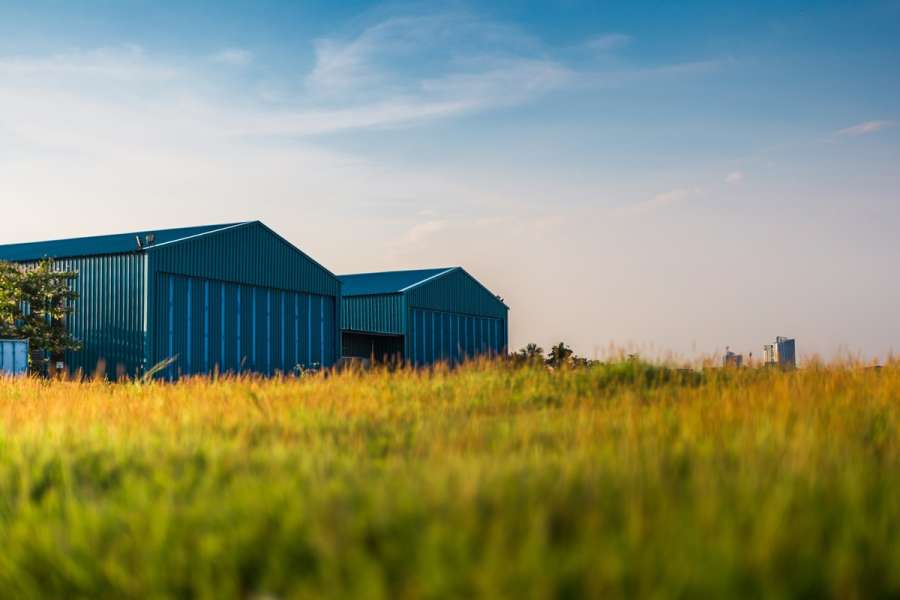
Armstrong v Armstrong, 2024 EWHC 2989 Ch
The case involved the estate of the late Alan Armstong. Alan and his wife, Margaret, were from farming families and bought two farms in North Yorkshire during their marriage, “Allerton Grange Farm” and “North Cowton Grange Farm”.
Margaret died in 2018 and Alan died in 2020, leaving five children. Two of their sons, Simon and Richard, had worked on the farms since they were teenagers.
Richard worked primarily at North Cowton and lived there with his wife and children at the farmhouse. Simon primarily worked at Allerton Grange and lived in a separate property nearby.
There had been tensions between Simon and Richard for many years, and steps had been taken to separate the day-to-day operations of the two farms to avoid conflict.
Further difficulties arose in later years when Richard’s son, Thomas, began working at North Cowton.
Thomas had difficult relationships with both Simon and Alan.
In 2020, Alan visited a solicitor and changed his Will to leave Allerton Grange to Simon and North Cowton to Simon’s son, George. Richard did not receive any provision under the Will. Richard brought a Proprietary Estoppel claim against Alan’s estate.
Court Findings on Proprietary Estoppel
The Court found that Richard’s claim satisfied the elements of proprietary estoppel for the following reasons:
- It was more likely than not that Alan had promised Richard that he would inherit North Cowton; this was due to various factors such as notes of meetings with solicitors over the years where future plans were discussed, along with evidence given by various family members in person at the trial.
- Richard had relied on the promise to his detriment by choosing to attend agricultural college rather than university, continuing to work at North Cowton for a modest income, taking on responsibility for farm debts and not making arrangements for the possibility of having to leave the farmhouse in the future.
- The promises made by Alan were broken and this was unconscionable as they were made over a period of over 35 years and altered Richard’s position in life as he had poor prospects of finding alternative work or being able to purchase a property of his own.

Lessons from Armstrong v Armstrong
Whilst early and clear discussions within agricultural families about succession planning are the most reliable method of avoiding disputes, such as Armstrong, there are numerous reasons why this often does not happen, such as family dynamics and relationships.
The effect is that individuals need to turn to litigation for a remedy.
If you find yourself in a position similar to Richard Armstrong's, it is crucial to seek advice from an expert as soon as possible.
Contact Our Agriculture and Contentious Probate Teams
If you are dealing with a contentious probate matter or need guidance on proprietary estoppel claims, our expert team is here to help.
Our Agriculture team have extensive experience in resolving complex inheritance disputes, particularly those involving agricultural estates.
01619414000
More Agriculture News and Advice

Which Business Structure Is Right for Your Farm or Rural Business?
Whether you are managing 500 acres of arable land, a diversified portfolio of holiday lets and farm shops, or an estate, the vehicle you choose dictates your exposure to risk and your tax legacy. For family farms and rural businesses, the business structure is more than just a legal framework. It is also the focus of planning the business's...
Read Blog
Fair Work Agency and Agricultural Businesses - What Does the Future Hold?
From 7 April 2026, the UK’s new Fair Work Agency (FWA) will begin operating as a single labour market enforcement body. For agricultural businesses, many of which already navigate seasonal labour pressures, visa compliance for foreign workers, and tight economic margins, this marks a regulatory shift which will significantly affect the sector. In...
Read Blog
How Will the 2026 Changes to Agricultural Property Relief and Business Property Relief Affect Gifts to Younger Family Members?
Significant inheritance tax changes are coming into effect from 6 April 2026 that will affect farmers and rural business owners. The changes are in relation to the reduction of availability of Agricultural Property Relief (APR) and Business Property Relief (BPR) in relation to Inheritance Tax payable on lifetime gifting and on death. Our...
Read Blog
Inheritance Tax Changes for Farmers and Rural Businesses: What They Mean for You
Significant changes are coming to inheritance tax (IHT) that will affect farmers and rural business owners from 6 April 2026. Agricultural property relief (APR) and business property relief (BPR) are very valuable reliefs from IHT. However, in the 2024 Autumn Budget, the government announced major changes to the relief , which have sent...
Read Blog
Structure of a New Business in the Agricultural and Rural Business Sector
In the current climate, many farming families are considering ways to diversify their business activities. In the UK, many new businesses start out as sole traders. It’s quick, cheap, and gives full control. As the business grows over time, the risks and responsibilities become greater. Remaining as a sole trader may no longer be the best way...
Read Blog
Parenting Arrangements in Farming Families: Balancing the Paddock and Parenthood
Parenting is never a one-size-fits-all journey, and for farming families, the landscape of raising children looks distinctly different from the suburban norm. With early mornings, seasonal demands, and the realities of rural life, parenting arrangements require a unique blend of flexibility. Our Family and Agriculture lawyers explore and explain...
Read Blog
Rhiannon Edwards
Senior Associate
Rhiannon is a Senior Associate and joined the Myerson team in 2024. Rhiannon is an experienced probate litigator and advises on a full range of probate disputes. She is a full member of the Society of Trust and Estate Practitioners (STEP) and is working towards her Association of Contentious Probate Specialists (ACTAPS) full membership.
About Rhiannon Edwards