
Our Intestacy Disputes Service
Contesting Probate When There Is No Will
You can often still contest probate even when there is no Will.
While you cannot challenge a Will that does not exist, you can enter a caveat to stop a grant of letters of administration being issued, challenge who is administering the estate, or bring an Inheritance (Provision for Family and Dependants) Act claim if you have not received reasonable financial provision under intestacy.
When someone dies without a Will, their estate is dealt with under the intestacy rules.
Many people assume that, with no Will, the outcome is fixed and cannot be changed, but that is often not the case.
Our specialist contentious probate solicitors act for spouses, partners, children, dependants and other relatives who want to challenge how an intestate estate is being handled, or who believe they have been treated unfairly by the intestacy rules.

How We Can Help
If there is no Will, there are still several ways we can act for you, including:
- Contesting probate by entering a caveat at the Probate Registry to stop a grant of letters of administration from being issued while concerns are investigated.
- Challenging the administrator where the person applying is not entitled under the intestacy rules, or is unsuitable, conflicted or untrustworthy.
- Bringing an Inheritance (Provision for Family and Dependants) Act claim where the intestacy rules have not left you a reasonable financial provision.
- Resolving administration disputes where there are delays, a lack of information, or suspected mismanagement of the estate.
- Correcting a defective grant that was obtained on the wrong basis or using mistaken information.
What the law does not allow is a challenge based simply on a disagreement about how the statutory rules divide the estate.
To change the outcome, you generally need a specific legal basis, such as the Inheritance (Provision for Family and Dependants) Act 1975, and we will tell you honestly, early on, whether you have a viable claim.

The Claims and Challenges We Handle
Inheritance Act 1975 claims
The Inheritance (Provision for Family and Dependants) Act 1975 allows certain people to claim that the intestacy rules have not made reasonable financial provision for them, including spouses and civil partners, former spouses who have not remarried, children (including adult children), those treated as a child of the family, financial dependants, and qualifying cohabiting partners.
Here, you are not disputing that there was no Will; you are challenging the effect of intestacy and asking the court for a fairer share of the estate or ongoing maintenance. We assess your prospects against the factors the court weighs including your financial needs and resources, those of other beneficiaries, the size of the estate, any obligations the deceased had towards you, any disabilities, and the wider circumstances.
Disputes over administration
Disputes frequently arise over who should administer an estate and how they are doing it, for example, arguments over who has priority to apply for a grant, concerns that the proposed administrator is unsuitable or conflicted, refusal to share information, or suspected mismanagement.
We can act to place a caveat that pauses the grant, apply to remove or replace an administrator, and require a full account of the estate's assets, debts and distributions.
Mistakes in the grant of letters of administration
Sometimes a grant is obtained on the wrong basis, for example, incorrectly asserting that there is no Will when a valid one later emerges, incorrect information about the deceased's marital status or children, or an application by someone without priority.
We can consider applying to have the grant amended or revoked, to stop further dealings with the estate until matters are corrected, and to recover assets distributed in error. Prompt action is vital in these cases.
Understanding the Intestacy Rules
Knowing where you stand under the intestacy rules is the starting point for any challenge.
The rules in England and Wales follow a strict order of priority.
Spouses and Civil Partners
A spouse or civil partner is usually first in line.
Where there are no children, they inherit all of the estate; where there are children, spouses/civil partners receive a statutory fixed sum and a share of the remainder of the estate, with the rest divided between the children.
Problems often arise when the surviving spouse is not the parent of all of the children, or when there have been prior marriages.
Children and other relatives
If there is no surviving spouse or civil partner, the estate usually passes to children (including adopted children),then parents, siblings, half-siblings and more distant relatives in turn.
Stepchildren who have not been legally adopted, and relatives by marriage alone (other than spouses), are excluded, which can be particularly harsh where someone was financially dependent on the deceased or treated as part of the family.
In those cases, we can advise on a challenge using the Inheritance (Provision for Family and Dependants) Act 1975.
Unmarried partners
Unmarried partners do not automatically inherit under the intestacy rules, regardless of how long-term and committed the relationship was.
This is often the hardest outcome of all for a surviving partner who shared a home, children or finances with the deceased.
If this is your situation, we can advise on bringing an Inheritance Act claim as a cohabitee or dependant, entering a caveat where you have concerns about the administration, and protecting your position quickly.
How We Work
Assessing your position and gathering evidence
We start by reviewing your situation and telling you whether you have a viable case. Evidence is central to any challenge, and we will do what we can to help you assemble it. This can include financial documents showing dependence on the deceased, correspondence or messages showing their intentions, medical or care records, copies of any known Wills or earlier estate-planning documents, and details of the estate's assets and liabilities.
Protecting your position with a caveat
Where the immediate priority is to stop a grant being issued, we can enter a caveat at the Probate Registry. This prevents a grant of letters of administration from being issued while it is in place and buys you time to investigate. A caveat is not right for every case, and it can be "warned off" by the proposed administrator. We advise carefully before entering a caveat, as there can be cost consequences of improperly doing this. ,
Negotiation, mediation and court proceedings
Most contentious probate disputes settle without a trial. We typically advise and gather evidence, send a letter before action setting out your claim, negotiate with the other side, and use mediation or other forms of alternative dispute resolution.
The court expects parties to try to resolve matters constructively, and a negotiated settlement usually saves time, cost and strain.
Where settlement is not possible, we can represent you through to a court decision — whether that is an Inheritance Act claim, a ruling on who should administer the estate, the revocation of a grant, or directions on how the estate should be dealt with.

Time Limits and Costs
The six-month deadline
Inheritance Act claims must be issued with the court within six months of the date of the grant of representation.
The court has the power to allow late claims, but will only use this in certain circumstances.
You should therefore treat the six-month period as a hard deadline and contact us immediately if you think you may have a claim.
Different time limits apply to other challenges, such as administrative disputes or defective grants, so early advice is important.
What affects costs and timing?
Costs and duration of a claim depend on a number of factors, including the size and complexity of the estate, the number of people involved, the level of family conflict, how quickly documents can be obtained, whether the case settles or needs a hearing, and the strength of the evidence.
We can discuss funding options with you, which may include fixed-fee initial advice or staged payments depending on your circumstances.
We will work to keep costs proportionate to the value of the estate.

Contesting Probate When There Is No Will FAQs
Can you contest probate if there is no Will?
Yes. You cannot contest a Will that does not exist, but you can challenge an intestate estate in other ways, by entering a caveat to stop a grant of letters of administration, by challenging who is appointed as administrator, or by bringing an Inheritance Act claim if you have not received reasonable financial provision under intestacy.
Who can apply for probate if there is no Will?
The right to apply for a grant of letters of administration follows a strict order of priority, usually starting with the spouse or civil partner, then children, then other relatives. If someone applies who does not have priority, or who is unsuitable, that can be challenged.
Do you need probate if there is no Will?
Often, yes. A grant of letters of administration is usually needed before someone can deal with the estate's assets, such as property or larger bank accounts. Smaller, simpler estates may sometimes be administered without one, depending on the assets and how they were held.
How long does probate take when there is no Will?
A straightforward intestate estate can take several months to administer once a grant is issued, but timescales vary with the size of the estate and whether there is any dispute. A contested estate, or one involving an Inheritance Act claim, can take considerably longer.
What happens if there is no Will and no one applies for probate?
If there are assets such as properties, the administrator will not be able to deal with these meaning the estate cannot be properly administered, and assets remain frozen. Creditors may take action, and ultimately, if no entitled relative comes forward, an estate can pass to the Crown. If you are entitled to inherit and no one is dealing with the estate, you can usually apply yourself or take advice on your options.
How do I challenge the person dealing with the estate?
You can enter a caveat to pause the grant while concerns are investigated, ask the court to remove or replace an administrator who is unsuitable or acting improperly, and require them to account fully for the estate. These steps are fact-sensitive, so take advice before acting.
Why Work With Our Contentious Probate, Wills and Trusts Team?
- We’ve been named Best Contentious Probate Team at the British Wills and Probate Awards 2025, recognising our legal expertise, courtroom skill, national reach, client care, and transparency.
- We have been ranked as a Top Tier law firm by the Legal 500 for the last seven years.
- We have been recognised by The Times and The Lawyer as a Top 200 UK law Firm.
- Price transparency - we provide our clients with clear cost advice at the outset with ongoing updates throughout the matter. Sometimes, we can pursue a contentious probate claim for you on a no win no fee basis.
- The contentious probate team is led by experienced Partner Helen Thompson, a member of STEP (the global professional association for practitioners who specialise in inheritance and succession planning) and has completed the Advanced Certificate in Trust Disputes.
- All our Contentious Probate solicitors are members of the highly accredited Association of Contentious Trust and Probate Specialists ACTAPS.
- We have the largest team of contentious probate solicitors in the Northwest, ensuring you receive the best legal advice and support.
- We are a full-service law firm operating from a one-site office, which means our teams communicate effectively and efficiently, and our contentious probate lawyers can draw on support from other specialist lawyers, such as property, private client, agricultural, family, commercial and corporate lawyers.
- We use the latest technology to ensure that we are working as efficiently as possible and that geographical distance is no bar to us from providing you with excellent client service.
- Please take a look at the Myerson Promise for further benefits of working with us.
Testimonials

Ms J
Thank you so much for the information, and for everything all of you did for me. I know you were all doing your jobs and that I was just another name on a file, but I will not forget your support, nor your understanding.

Legal 500, 2027
I have worked recently with Nicola Moulds, who is a joy to work with and demonstrates the knowledge and skill to represent her clients at mediations. She is fantastic at what she does and a credit to her firm.
Ms Syder
When I first contacted Myerson for advice with regard to my situation, I found them to be professional, patient and informative. During the process, I did at times find myself emotionally overwhelmed and stressed; however, Jennifer and Katie went above and beyond to support me and guide me through the options, giving me time to evaluate everything. The whole Contentious Probate Team made me feel supported and confident in my inheritance claim. I can’t thank them enough.
Caron & Mike
We were completely overwhelmed by our situation that needed legal advice and representation. Our turmoil ceased swiftly once we spoke to Jennifer. She was supportive, kind and caring whilst remaining professional and "to the point". Her knowledge and advice reassured us and gave us confidence in her expertise. We appreciate her and her team and would have no problem recommending them to anyone.
Mr Morgan
I just wanted to thank you for your brilliant work on my case. I know it wasn't the easiest of cases and I wasn't the easiest of clients you've ever had. But I would like to thank Nicola and her team for their hard work. Also Stephanie was excellent. Please pass on my gratitude to her. I'm really grateful for what you did for me. I can now move on with my life thanks to you. You have my deepest respect.
Legal 500, 2027
The team has an excellent and well-deserved reputation for their work in this specialist area. They have a very strong all-around team who support each other brilliantly. Eleanor Clarke is an absolute pleasure to work with: she is calm, has great judgment, and is very dedicated to securing the best result for her clients. Olivia Shorrock is also extremely impressive: she is thorough, attentive, and completely reliable.
Mr A
I honestly can say that in my absolute worst time Myerson came through like a light in absolute darkness. I spoke with few firms and nobody matched the compassion, professionalism and honesty that I desperately needed. Please, anyone who needs legal representation, you can’t get better than Myerson’s in my experience.
Paul
I wanted to write and thank you and your team for everything you have done for me. Your understanding of my mental issues has been unquestionable, and the patience you and the team have shown throughout the whole case has been brilliant, even at my worst when I could barely string a sentence together. I will not hesitate to recommend you and your company at any opportunity I get. Truly a 5 star company with morals that are very rare nowadays.
Mr. S
We researched and contacted 4 firms regarding this matter, 2 including yourself responded to my initial phone call, a 3rd promptly to an online enquiry and the 4th took a week to reply. It was your personal response and the most detailed email follow up compared to your competitors that won the day.
Mr. J.
Rebecca Blundell was excellent, she was highly professional, efficient and above all delivered the results.
Mr Naylor
Fantastic firm - couldn’t recommend enough! Nicola and her associates worked so hard to achieve a big win for me on my grandfather's estate . The knowledge that they all have in their own areas astounded me, and they are all such genuine, lovely women .

The British Wills and Probate Awards Judging Panel
Myerson demonstrated the highest standards of legal expertise, courtroom skill, national reach, client care, and transparency, proved through reported trials, directory praise, and client testimonials.
Amanda
Jennifer has been incredibly patient and supportive and has given good advice. After I believe I was badly advised by a previous legal representative. Highly recommended.
Hannah
Thank you for the effort and hard work Jennifer and everyone at Myerson have put into my case; I appreciate it’s been a long haul, and it just felt necessary to express that gratitude.
Edwin
I found Jennifer McGuiness to be very friendly and very knowledgeable and gave Sensible advice.
Ms Syme
Great level of expertise and scope in all areas.
Ms Jackson
Eleanor Clarke was on the ball, honest, clear and lucid.
Mr Davies
The team have shown me great empathy and compassion at a very difficult time in my life and hope for the future.
Mr Borrett
Nicola Moulds has been very understanding of my situation, as have all the other people I have communicated with in Nicola’s team. I would have no hesitation in recommending them.
Anne Bailey
Thank you so much Stephanie for listening to me today and being so kind and empathetic. I think I may have been naïve and too trusting. I have forwarded your information to my Son and Daughter. On a personal note can I thank you for your time and being so kind and understanding. We need more people like you in the World.
Legal 500, 2022
It’s the personal touch they offer, including their empathy for your individual case.
Legal 500, 2022
Helen Thompson and Stephanie Ewan lead the team and were always available at the critical times. This involved out of hours working as well as comprehensive management of the resolution.
Legal 500, 2022
Helen Thompson is a true champion of her clients, working tirelessly for the right outcome for them. A real gem in the sector and deserves recognition in her field.
Legal 500, 2022
Helen Thompson is considered ‘a true companion‘ by her clients for her litigation work.
Legal 500, 2022
Stephanie is very professional and patient. She will help you with any questions you may have.
Legal 500, 2022
Myerson’s are the go-to firm for contentious trust & probate, exceptional knowledge and negotiating skills. Will fight your corner well and reasonably priced for the high level of service.
Legal 500, 2024
Myerson have set themselves apart from most every contentious probate practice in the North West. There is an exceptional level of talent at almost every level. Myerson deal with matters that are often fraught with complexity and emotion in a highly diligent and sensitive manner. When Myerson instruct me as counsel, their instructions are concise and well prepared.
Legal 500, 2024
They are genuine specialists in this area, with many of the team having obtained or working towards full ACTAPS membership and have strength in depth. When they are on the other side of a matter we know that their client will be getting sensible, practical advice from a knowledgeable team. They are a top level firm in the North West in this area.
Legal 500, 2024
The Myerson contentious trusts and probate team is the go-to team in the North of England, in my view. All its members who I have dealt with are superb – no weak link.
Legal 500, 2022
Myerson has given constant support and works together with the client proactively to get the matter resolved successfully and cost-effectively.
Legal 500, 2022
Compared with other firms I have dealt with Myerson’s took a very direct route in achieving success on my behalf. I was frequently able to discuss an issue online with several members of the team whenever an unexpected situation arose.
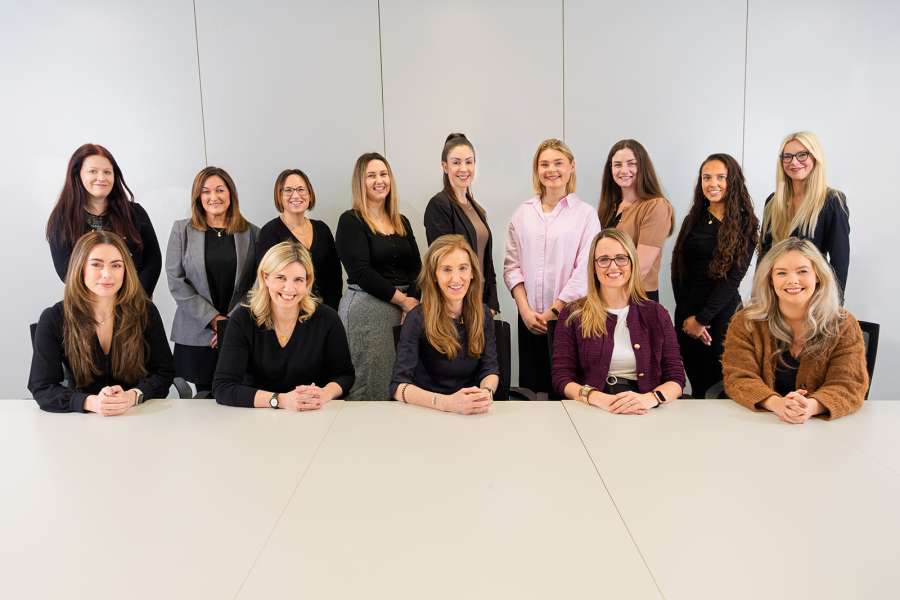
Meet Our Contentious Probate Solicitors
Home-grown or recruited from national, regional or City firms. Our contentious probate lawyers are experts in their fields and respected by their peers.
Contact Our Experts
You can contact our lawyers below if you have any more questions or want more information:
0161 941 4000
Latest Myerson Contentious Probate News

Myerson Magazine Autumn 2026 Issue
Welcome to the latest edition of Myerson Magazine, where we share practical legal advice, expert insights and news from across Myerson Solicitors. In this issue, we cover some of the important legal considerations that arise at different stages of life, from protecting family wealth and planning for the next generation to understanding your...
Read Newsletter
McDaniel v Talbot: Can an Estranged Child Contest a Parent’s Will?
Being left out of a parent’s Will can be particularly difficult where a once-distant relationship has been rebuilt, but the Will still reflects an earlier period of estrangement. For an adult child in this position, the question is not simply whether their exclusion feels unfair, but whether the Will makes reasonable financial provision for their...
Read Blog
Can I Challenge a Will if My Relative Had Dementia?
Discovering that a loved one changed their Will shortly before they died can be upsetting and distressing, particularly where the changes have an adverse effect on those closest. That is particularly true if they had been diagnosed with dementia and the contents of the Will come as a complete surprise. A question we are frequently asked is: "Can...
Read Blog
Myerson Magazine Summer 2026 Issue
We're pleased to share the latest issue of Myerson Magazine, bringing together practical legal insights, updates on significant legislative changes and stories from across the firm. In this Summer edition, our experts explore the legal issues affecting individuals, families, business owners and property investors, from the Renters' Rights Act and...
Read Newsletter
Inheritance Rights for Unmarried Couples: What Happens If Your Partner Dies?
Many couples live together for years, sharing a home, finances, and children, believing that time alone provides the same protection as marriage. It doesn’t. In England and Wales, an unmarried partner has no automatic right to inherit, regardless of how long the relationship lasted. To understand your rights and risks, this guide from our...
Read Blog
Netflix's The Four Seasons: Who Inherits If a Divorce Isn't Finalised?
Viewers of Netflix’s The Four Seasons will have followed the emotional fallout of Nick’s sudden death and the complicated situation he leaves behind. The second season of the hit comedy-drama has been praised for its sharp, often poignant exploration of midlife relationships, where love, loss, and life changes collide in ways that are both funny...
Read Blog