

In previous articles, our Manufacturing Solicitors have discussed some of the key clauses in manufacturing agreements, such as terms and termination, pricing, and liability and considered the effective use of Service Level Agreements.
Continuing the theme, this article discusses some further, and equally important, clauses in manufacturing contracts, with a focus on areas where the contract terms need to be carefully tailored to reflect how the manufacturing operations are intended to operate in practice.
We first examine clauses that allocate responsibility between the parties for the provision of equipment and samples, and then consider provisions related to the delivery and acceptance of manufactured products.
Provision of Equipment and Samples
In manufacturing arrangements, it is common for the customer to provide the manufacturer with equipment (such as machinery, moulds, or tooling) to aid production of the goods.
These assets may be crucial to the successful performance of the contract, and can carry significant value and risk in their own right, so provisions should be included to address points, including those set out below:
- Ownership: The agreement should expressly confirm whether ownership of customer-supplied equipment will remain with the customer, or will pass to the manufacturer.
- Condition: The manufacturer may wish to include provisions confirming that the equipment supplied by the customer will be in good working order and appropriate for manufacturing the products in conformity with any specification.
- Maintenance: The agreement should set out clearly who is responsible for the upkeep, insurance, and repair of the equipment.
- Usage: The agreement should set out the manufacturer’s usage rights in respect of the equipment, for example by confirming (if applicable) that the equipment should only be used for fulfilling the manufacturer’s obligations under the relevant agreement.
- Return or disposal: Upon expiry or termination of the agreement, obligations around the storage, return or destruction of customer equipment should be clearly defined.
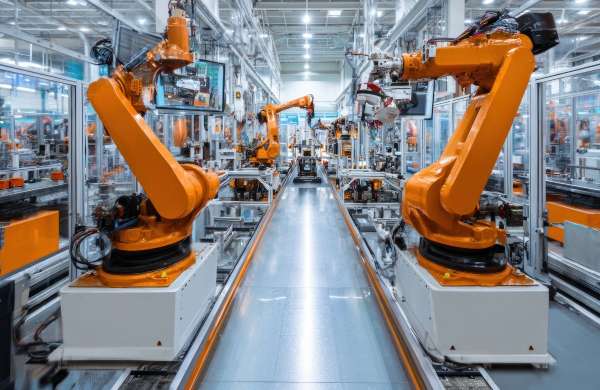
The customer may also want to be sure that the manufacturer (using the customer's technology and equipment) is able to produce products that conform to the specification and industry standards.
The customer should therefore consider including provisions which require the manufacturer to submit pre-production samples of the relevant products for the customer’s approval prior to beginning full-scale production.
Delivery and Acceptance
In any manufacturing arrangement, clarity around the delivery and acceptance procedure is essential to avoid disputes and maintain smooth and efficient commercial operations.
Delivery
Key points for the parties to consider when reviewing the delivery provisions within a manufacturing agreement include:
Delivery Date and Location
The contract should indicate at what point in time, and at what location, delivery is deemed to take place. Delivery may, for example, be defined by reference to the arrival of manufactured goods at the customer’s premises, or by collection of the goods by the customer at the agreed delivery location.
It is important for the contract to be clear about the circumstances where delivery is deemed to have occurred. For example, if delivery will take place based on collection of the goods by the customer, the contract will typically indicate that collection must take place on a specified date, or within a set period (e.g. 3 business days) after the manufacturer gives notice to the customer that the goods are ready for collection.
Delivery may then be deemed to be complete once the products have been loaded onto the customer’s chosen mode of transport or after the expiry of the period permitted for collection if the products have not in fact been collected within that time. This distinction is important, as delivery typically marks the point at which the risk in the products transfers from the manufacturer to the customer.
Delivery in Instalments
Where permitted, manufacturers may also reserve the right to deliver orders by instalments, with each instalment treated as a separate contractual obligation allowing for partial invoicing and payment.
Delays
It is important to note that delays in delivery may not automatically entitle the customer to refuse delivery, claim damages, or terminate the agreement.
Furthermore, if the customer fails to collect the products within the agreed window, then:
- Delivery may be deemed to have occurred on the last permitted collection day
- The manufacturer may reserve rights to charge the customer for additional storage and other related costs (including insurance)
This structure ensures that manufacturers are not left holding unsold stock or incurring storage costs unnecessarily due to customer inaction.
Delivery Notes
The customer may want to consider including an obligation on the manufacturer to ensure that each delivery is accompanied by a delivery note containing key details (such as the order number, product codes, and quantities etc). Where delivery is made in instalments, the delivery note should also specify any outstanding balance.
Tolerances
To reflect practical realities, many manufacturing contracts allow for reasonable variations in quantity, for example, permitting up to a fixed percentage more or less than ordered. In such cases, the customer may not reject the order, though the invoice will be adjusted on a pro-rata basis.
Packaging Materials
Obligation around packaging materials should also be clearly defined, confirming who will retain ownership and responsibility for disposal, whether the customer is obliged to make the materials available for return, and which party shall bear the costs of such return if so.
Acceptance
Following delivery, the customer will usually have a limited window to inspect the goods, and reject any that do not comply with the product’s warranty or specification. If the customer fails to notify the manufacturer within such period, the goods may be deemed accepted, and the right of rejection will be lost.
The customer should ensure that such timeframes granted under the agreement are realistic and allow enough time to carry out the required inspection of the goods.
Manufacturers will typically attempt to exclude liability for product non-compliance in the following scenarios:
- The customer continues to use the goods after giving notice of non-compliance;
- The defect is caused by improper storage, installation or use by the customer;
- The manufacturer relied on customer-provided designs or specifications;
- The goods were altered or repaired by the customer without consent;
- The issue arises from wear and tear, negligence, or abnormal conditions; or where
- Variations were made by the manufacturer to comply with regulatory requirements.
The aim of such exclusions is to allocate responsibility fairly and prevent unjustified claims by the customer.
The customer should ensure that, if it makes a valid rejection of the goods, the contract provides adequate remedies, which may include the right to demand:
- Repair or replacement of the defective goods; or
- A full refund of the price paid for such defective goods.
Contact Our Manufacturing Team
We have experience in preparing model forms of agreement for businesses that provide contract manufacturing services and have also advised businesses intending to enter into such arrangements as a customer on the review and negotiation of the provider’s standard terms.
If you have any questions on this topic or would like more information regarding contracts in the manufacturing sector or any other legal issues in the sector, you can contact our manufacturing lawyers.
0161 941 4000
Latest Myerson Manufacturing News

Buying Industrial Premises for Manufacturing: A Practical Legal Guide
For a manufacturing business, owning a site rather than leasing one offers several benefits. Although the due diligence required may be lengthy and the initial expense large, purchasing a site can give a buyer both more flexibility and certainty, without having to obtain a landlord's consent or the uncertainty that arises from lease renewals or...
Read Blog
What Due Diligence Is Required for a Commercial Property Purchase?
Purchasing a commercial property can deliver strong returns, whether through rental income received from tenants or long-term capital growth. It does, however, entail a range of legal and practical risks that, if not addressed and managed before exchange of contracts, can significantly affect the property’s value. Our Commercial Property team...
Read Blog
CO₂ Shortages: Key Legal and Contractual Issues for Manufacturers
Current geopolitical tensions in the Gulf region have renewed concerns about the resilience of global energy and industrial supply chains, increasing the risk of disruption to key inputs such as carbon dioxide. While the UK has recently agreed to invest £100 million to reopen a carbon dioxide production plant on Teesside as part of a contingency...
Read Blog
Navigating UK Immigration Changes: What Manufacturers Need to Know
For many manufacturing businesses, recruiting and retaining skilled international talent has become increasingly challenging. In this Q&A, Robert Brothers, Head of Myerson's Manufacturing Sector, speaks with immigration specialist Mohammed Hafejee, Partner at Latitude Law, to explore how recent changes to the UK’s immigration rules are affecting...
Read Blog
Ring-Fencing Risk in Manufacturing: Is It Time for a Holding Company?
Manufacturing is one of the most asset-heavy and risk-exposed sectors in the UK. When something goes wrong for the business, the financial consequences can be significant. Despite the risks associated with a manufacturing business, many still operate through a single limited company that owns everything, from the trading operation to properties...
Read Blog
Webinar: Industrial Property and Energy Efficiency: Key Legal Issues for Manufacturing Tenants
The manufacturing sector in England and Wales is undergoing rapid change. With rising energy prices, tightening sustainability regulations and increasing property-related costs, manufacturers are facing operational pressures that cannot be ignored. As Big Energy Saving Week (17–23 January) shines a spotlight on improving efficiency and reducing...
Watch Webinar