

What is the collaborative divorce process?
Collaborative law is a process in which both parties, along with their specially trained solicitors, work together to reach an agreement that benefits everyone involved, especially any children.
The collaborative process encourages open, honest discussions, with both parties working together to find fair and mutually beneficial solutions.
Unlike traditional litigation, which can be adversarial and stressful, collaborative law focuses on open communication and mutual problem-solving.

How does the collaborative process work?
The collaborative process involves each party instructing a collaborative lawyer and entering into a participation agreement, which commits to resolving issues without court proceedings.
The collaborative process involves you and your former partner sitting down with your collaborative lawyers in the same room to try and work things out face-to-face instead of exchanging letters.
You will have a series of structured meetings where everyone works together to find solutions for both parties.

What are the benefits of the collaborative process?
Collaborative law can help separating couples reduce the emotional and financial strain that can come with litigation by working together in a non-adversarial environment.
As part of the collaborative process, other neutral professionals, such as financial advisors, family consultants, or pension experts, can be brought into the joint meetings to address specific areas of your divorce, provide expert guidance, and ensure that discussions remain productive.
This approach can help separating couples maintain a positive relationship post-separation, especially when children are involved.
You will have the benefit of your own independent legal adviser, but you can set the agenda to discuss the things that matter most to you and your family.
With the support of trained professionals, we can help you navigate this difficult time in a way that prioritises your family's needs.
Our Collaborative Lawyers
At Myerson, our experienced Family Law team is here to support you throughout the collaborative process.
Jane Tenquist and Sarah Whitelegge are specially trained Collaborative Lawyers dedicated to helping clients navigate separation and divorce with dignity, compassion, and cooperation.
Together, they provide expert legal advice while ensuring open communication and mutual respect remain at the heart of every discussion, helping clients find amicable resolutions that prioritise their family’s unique needs.

Testimonials

Mr S, Warrington
I found Jane Tenquist to be both very knowledgeable, professional and easy to relate to. I would have no hesitation in recommending Jane or Myerson.
Vinutha S.
I am thankful to Jane Tenquist and her team with special mention to Brittany Rodwell for their professionalism. Their advice, care and guidance was immense and was a blessing in disguise which helped me to get through the dark moments of my life. All along they briefed me on what to expect and how things will proceed. They were supportive and reassuring and addressed my stressful concerns in time.

Legal 500, 2027
An extremely strong team outside the city centre. Jane Tenquist is a fabulous team leader, and the team is committed to NCDR wherever it works for clients. A bright and able family law team.
Legal 500, 2027
Jane Tenquist is a superb department head. Sarah Whitelegge, Nichola Bright, and Joe Ferguson are strong lawyers with exceptional client care skills.
Legal 500, 2027
Kind, caring, strong, and professional.
Legal 500, 2027
I think this firm has a unique family team. Although they are professional and will always try to get the best for their clients, they are also empathetic and caring and will be realistic with their clients, always managing expectations.
Mrs T
It was so wonderful to meet the Myerson Family Team. The whole experience felt relaxed and completely free from pressure, and everything was explained clearly and in layman’s terms, which was incredibly important to me during such a difficult time. I left feeling truly heard and respected, not just like another case in a system. Brittany made me feel seen as a person, and that meant everything to me.
Mr. H
Fantastic service from Sarah Whitelegge and Nichola Bright. Both highly knowledgeable, experienced and approachable dealing with all queries and concerns in a timely and professional manner.
Mrs P., Northwich
Jane Tenquist remained calm and determined throughout. Her professionalism and knowledge of divorce law is beyond reproach. Jane gave me support at a time when I needed it most and from that the strength and confidence to fight for what was rightfully mine. I am very grateful to Jane and I would not hesitate in recommending her to anyone who is in need of a Divorce Lawyer.
M A, Urmston
From start to finish everything done by Myerson was perfect. Nothing was any trouble, no matter how many times I contacted them over matters.
Mr L.
Did not have any issues that I had not thought had been dealt with efficiently or effectively. Would recommend to others.
Miss W., Altrincham
The Solicitors at Myerson were really helpful and dealt with my case really quickly. They kept me updated throughout and the whole process was very smooth, thank you!
Mr P., Stretford
It’s been a pleasure working with you. Your approach has been a breath of fresh air.
Mrs F., Altrincham
Very friendly professional service shown at all times. It made a huge difference to see a smile greeting you at those meetings; and a friendly voice on the end of a phone when your world seems to be crumbling around you.
Mr F, Heald Green
Excellent service. I would not hesitate in recommending Myerson. Nichola Bright was outstanding! Nothing was too much trouble for her.
Mr J., Rixton
Myerson Solicitors conducted my business in a highly professional manner. I was consistently kept informed of progress and any questions I had were answered in a timely manner.
Legal 500, 2021
An excellent matrimonial department within a larger firm, enabling the matrimonial team to harness advice on commercial matters in the drop of a hat.
Mr D, Knutsford
An outstanding service with thoughtful and relevant advice given throughout. Highly recommend.
Mrs F, Altrincham
I would certainly recommend Nichola Bright. She showed empathy and understanding throughout the whole process. She is a very professional and caring solicitor.
Mrs S, Liverpool
I went to Myerson and I could not have found a better, and more welcoming firm of solicitors. As well as their professionalism, Myerson offer charming surroundings, enhanced by friendly and helpful reception staff.
Legal 500, 2021
The team is headed by Jane Tenquist; her ability to listen, knowledge of this area of law, deciphering relevant key information critical to the matter and progression is highly commendable. Jane’s team are equally strong in these skills and together they work excellently. As a client I have felt to be in a very safe set of hands and I say thank you for your hard work.
Legal 500, 2021
As a client of the practice I have experienced positive and practical guidance from my first introduction. Filing for divorce following 35 years of marriage was a very traumatic life event but I have been supported and guided throughout the whole process. My wishes were listened to and then legal advice given provided as to my various actions.
Legal 500, 2021
They have an approachable, honest manner that is supported by extensive knowledge and experience. Nichola Bright offers her clients the feeling of confidence in her advice as well as her understanding and appreciation of the challenges they are facing. She has the human touch that is so valuable to clients.
Legal 500, 2022
They ensure that relevant experts are brought into the process when matters are outside the remit of the lawyers. This ensures clients get the best possible advice.
Legal 500, 2022
The individual team members are thorough in their approach to dealing with client enquiries and fully understand the need to ensure outside experts like myself are brought into the process when required. This gives clients the reassurance that all avenues have been explored when dealing with their case.
Jill
A complex and challenging case. However, Gemma constantly eased our anxiety and worries with her sound advice and calm, swift responses to our endless queries. She was always very professional and knowledgeable, able to explain clearly and concisely in both legal terms and layman's terms when we struggled to understand some of the complexities of the case. Always friendly and approachable, I would recommend her in a heartbeat. As a company they were very fair with their fees for which we are very grateful. A great service all round.
I wanted to extend a heartfelt thank you for the unwavering support and assistance you've provided thus far in handling my case. Today, our barrister delivered an outstanding performance, which fills me with optimism that we will continue to persevere with this level of dedication until the conclusion. Your assistance has been invaluable to me, especially during times of mental strain. Your unwavering support has truly made a significant difference.
Mr. Ahmad
I want to express my sincere thanks to Jane for her outstanding legal representation and unwavering support throughout my divorce and financial settlement case. Her expertise, diligence, and dedication were instrumental in achieving a favourable outcome.
Irfan
I cannot express enough gratitude for Jane Tenquist and her exceptional team at Myerson. During one of the most challenging periods of my life, they provided invaluable legal counsel and unwavering support. Ms Jane Tenquist is not only a brilliant legal mind but also an incredibly compassionate and understanding individual. She approached my divorce and financial settlement case with a keen eye for detail and a strategic approach, ensuring I received the best possible outcome. Her ability to navigate complex legal matters with ease and clarity was truly impressive.
Mr. C
Thank you so much – Jane and her team's support, professionalism and thoroughness throughout the last year has been superb.

Liam Kelly, Barrister, Deans Court Chambers
I have found Joe's management of this case…exceptional and well beyond his years. There have been some knotty issues in this matter…and his ability to cut through them and see the bigger picture is a credit to him.
Mr D
I would like to thank Nichola, and the family team, for all the guidance and support you provided to me during a very difficult time. This was much appreciated.
Meet Our Collaborative Divorce Lawyers
Jane Tenquist and Sarah Whitelegge are specially trained collaborative lawyers dedicated to helping clients navigate separation and divorce with dignity and compassion.
Contact Our Experts
You can contact our lawyers below if you have any more questions or want more information:
0161 941 4000
Latest Myerson Family Law News
Myerson Magazine Autumn 2026 Issue
Welcome to the latest edition of Myerson Magazine, where we share practical legal advice, expert insights and news from across Myerson Solicitors. In this issue, we cover some of the important legal considerations that arise at different stages of life, from protecting family wealth and planning for the next generation to understanding your...
Read Newsletter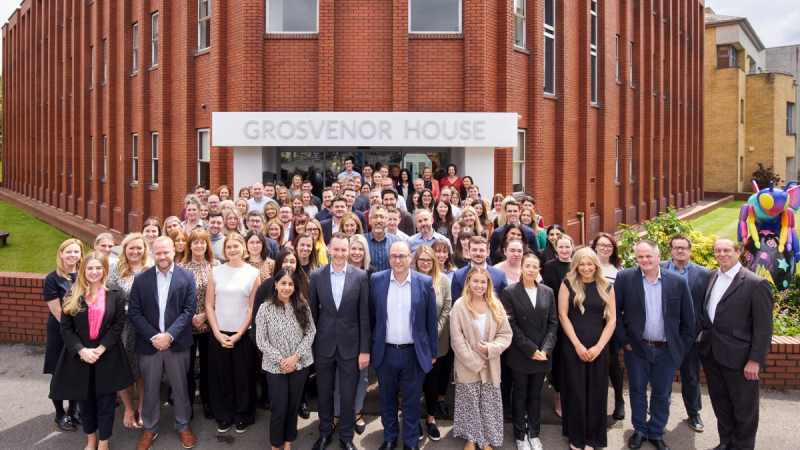
Myerson Solicitors Strengthens Chambers UK Rankings with Six New Recognitions in 2027 Guide
Leading independent law firm Myerson Solicitors has secured six new rankings in the Chambers and Partners UK Guide 2027, further strengthening its reputation for legal excellence and reflecting a sustained period of growth and success for the firm.
Read News
11
From Conflict to Collaboration with Marcie Shaoul
How can professionals better support separated parents to move away from conflict and towards a more constructive co-parenting relationship? The Myerson Family Law team is delighted to welcome Marcie Shaoul , founder of The Co-Parenting Method and one of the UK’s leading voices on constructive co-parenting following separation, for an engaging...
View Event
Do Grandparents Have Rights to See Their Grandchildren?
Grandparents often play a significant role in a child's life, providing emotional support and stability and, in some cases, being the child's primary caregiver. Official statistics published by the Office for National Statistics in 2021, together with more recent estimates from the Family Rights Group , suggest that around 160,000 children in...
Read Blog
Wedding Law Reform: Why the Proposed Changes Matter for Couples
The law governing weddings in England and Wales has remained largely rooted in legislation dating back to the nineteenth century. However, significant reforms may now be on the horizon. In July 2026, the government launched its consultation “ Tying the Knot: Reforming Weddings Law in England and Wales ”, proposing the most substantial overhaul...
Read Blog
The Remarriage Trap: What Every Divorced Person Should Know Before Saying “I Do” Again
For many, a second marriage is a true new beginning, a chance to improve with hindsight. Second marriages are far from uncommon. According to the Office for National Statistics (ONS) , around one in three opposite-sex marriages in England and Wales involve at least one person who has been married before. With thousands of divorced people...
Read Blog