

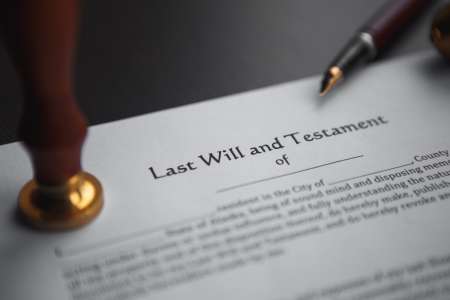
In a case that underscores the complexities of wills and the importance of ensuring proper legal processes, a woman who guided her dying mother's hand to sign a will has lost a high-stakes legal battle over a £700,000 estate.
The court's ruling is a stark reminder of the significance of testamentary capacity and the risks involved when wills are prepared under questionable circumstances.
Our Contentious Probate lawyers explore the case details and highlight the key legal principles.
The Case
Judgment has been handed down in the highly anticipated legal battle concerning the estate of Margaret Baverstock.
Margaret, 76, passed away in March 2021, leaving behind an estate valued at approximately £700,000.
Eight days before her death, she appeared to have executed a new Will, bequeathing her entire estate to her daughter, Lisa, and disinheriting her son, John.
Margaret had never made a Will previously.
This abrupt change raised suspicions, particularly given Margaret's deteriorating health and diagnosis of advanced dementia.
John contested the Will, asserting that his mother lacked the mental capacity to make such a decision and that the Will should be declared invalid.
Central to the case was a video recording presented by Lisa.
While Lisa intended for the footage to demonstrate her mother's intentions to execute the Will, it depicted Lisa physically guiding her mother's hand to sign the document.
Throughout this act, Margaret appeared largely unresponsive, merely uttering occasional affirmations like "yeah" or grunting when addressed.
Judge Jane Evans-Gordon at London Central County Court observed that Margaret "had no idea what was going on" during the signing and that her signature bore no resemblance to previous ones.
Consequently, she declared the Will invalid, stating that Margaret lacked the necessary testamentary capacity and did not know and approve the terms of her Will.
Without a valid Will, the estate was to be divided equally between John and Lisa under the intestacy rules.
Whilst Lisa will inherit £350,000 from her mother's estate, she faces a legal bill of £80,000 to satisfy John's legal costs alone whilst still being liable for her own.
The case highlights the potentially huge costs and consequences for parties who engage in legal proceedings surrounding wills prepared in questionable circumstances and the importance of early legal advice from professionals.
What is testamentary capacity?
For a person to have testamentary capacity, they must meet the following criteria:
- Understand the nature of making a Will – They must be aware that they are making a Will and its effects.
- Understand the extent of their estate – They should understand their assets and how they are distributed.
- Consider any potential claimants – They must appreciate who might have a reasonable claim on their estate (e.g., family, dependents) and make decisions free from undue influence.
- Not suffer from any disorder that affects their decision-making – If a mental disorder influences their decision in a way that leads to irrational or delusional choices, the Will may be invalid.

Why choose Myerson?
If you have concerns about the validity of a Will or other testamentary document, call us for a free initial chat.
Unlike most other solicitors' firms, we have a dedicated team that deals wholly with contentious probate disputes, that is, legal claims about the distribution of deceased persons' estates. We do not simply dip our toes into this area; we live in it.
More importantly, we are not just lawyers. We are real people who are well-used to dealing with clients who have highly emotive cases. We value competence and compassion in equal measure.
Contact our Probate Litigation Team on:
01619414000
More Contentious Probate News and Advice

McDaniel v Talbot: Can an Estranged Child Contest a Parent’s Will?
Being left out of a parent’s Will can be particularly difficult where a once-distant relationship has been rebuilt, but the Will still reflects an earlier period of estrangement. For an adult child in this position, the question is not simply whether their exclusion feels unfair, but whether the Will makes reasonable financial provision for their...
Read Blog
Can I Challenge a Will if My Relative Had Dementia?
Discovering that a loved one changed their Will shortly before they died can be upsetting and distressing, particularly where the changes have an adverse effect on those closest. That is particularly true if they had been diagnosed with dementia and the contents of the Will come as a complete surprise. A question we are frequently asked is: "Can...
Read Blog
Inheritance Rights for Unmarried Couples: What Happens If Your Partner Dies?
Many couples live together for years, sharing a home, finances, and children, believing that time alone provides the same protection as marriage. It doesn’t. In England and Wales, an unmarried partner has no automatic right to inherit, regardless of how long the relationship lasted. To understand your rights and risks, this guide from our...
Read Blog
Netflix's The Four Seasons: Who Inherits If a Divorce Isn't Finalised?
Viewers of Netflix’s The Four Seasons will have followed the emotional fallout of Nick’s sudden death and the complicated situation he leaves behind. The second season of the hit comedy-drama has been praised for its sharp, often poignant exploration of midlife relationships, where love, loss, and life changes collide in ways that are both funny...
Read Blog
Surrogacy and Succession: What the Longleat Trust Case Means for Modern Inheritance Disputes
A recent High Court decision involving the Longleat estate highlights an emerging challenge in trust and probate law: applying historic trust instruments to modern family structures, particularly those created through assisted reproduction and surrogacy. Although the case is rooted in aristocratic wealth, the legal principles are widely relevant...
Read Blog
When Silence Leads to Conflict: The Most Common Disputes We See After Someone Dies
National Grief Awareness Day is a chance to reflect on the impact of losing a loved one and the challenges families can face during an estate administration. While many estates are dealt with smoothly, grief can sometimes be made worse by disagreements over a deceased person's wishes or the actions of those who have been trusted to administer...
Read Blog
Katie Hayes
Senior Associate
Katie is a Senior Associate in the firm’s probate litigation department, advising clients on a wide range of contentious private client matters.
Her expertise includes will and probate disputes, claims under the Inheritance (Provision for Family and Dependants) Act 1975, trust and estoppel disputes, and claims under the Trusts of Land and Appointment of Trustees Act 1996.
About Katie Hayes