


In the recent matter of Re Waldorf Production UK Plc, the High Court approved the company’s second restructuring plan under Part 26A of the Companies Act 2006, exercising its cross-class cram-down power against HMRC.
In this blog, our Insolvency and Restructuring team explore the background to the case, HMRC’s objections and the court’s decision.
The Background
Waldorf was part of an oil and gas group operating in the UK’s Continental Shelf.
This wasn’t Waldorf’s first attempt at getting the court to approve a restructuring plan.
The company’s first plan (RP1) was proposed after the group suffered financial difficulties following the introduction of the UK Energy Profits Levy (EPL).
In August 2025, the court refused to sanction RP1 on the basis that there had been inadequate engagement with unsecured creditors and RP1 did not provide those creditors with a fair share of the restructuring benefits.
After the failure of RP1, a wholly-owned subsidiary of Harbour Energy Plc agreed to purchase most of the Waldorf Group for $205 million, with $85 million allocated to Waldorf.
The offer was conditional on the group’s EPL liabilities being extinguished, as well as other unsecured liabilities to an M&A creditor. Against that context, Waldorf formulated and negotiated a new plan which included a 2-day mediation attended by all plan creditors except for HMRC who chose not to participate.
The second plan (RP2) was launched in December 2025.
There were 4 creditor classes, and 3 approved RP2 with overwhelming majorities or unanimously. HMRC was in a class of its own and voted against RP2.
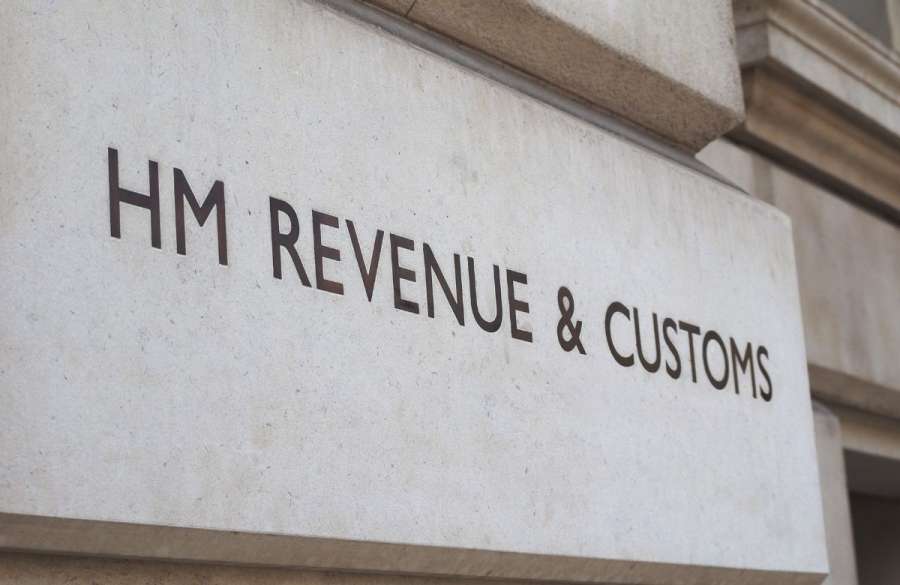
HMRC mounted a full challenge to RP2 using both jurisdictional and fairness arguments, as summarised below.

HMRC’s Objections
HMRC argued that:
- The court could not cram it down where it had rationally rejected RP2 in pursuit of its duty to collect tax;
- RP2 failed the “no worse off” test because Harbour would acquire and potentially use substantial ring-fenced tax losses, reducing future tax receipts;
- RP2 was an abuse of process as its principal purpose was to extinguish Waldorf’s tax liabilities, providing Harbour with a windfall, with the effect of avoiding tax that Harbour could afford to pay;
- RP2 was unfair as HMRC’s recovery of 14% of the EPL liabilities ($12 million) did not reflect the value of the tax losses; and
- It was Waldorf’s own conduct that contributed to its financial difficulties because it (1) paid a dividend and continued to trade despite not being able to pay its EPL liabilities, (2) did not seek to negotiate a time to pay arrangement with HMRC and (3) incurred costs in excess of $60 million in pursuing both RP1 and RP2.
The Court’s Decision
The court rejected all of HMRC’s objections. The court held that it had the jurisdiction to cram down HMRC where the statutory obligations are met and the plan is fair because:
- Otherwise HMRC would be able to veto any plan it rationally opposes, which could not have been the intent behind, and would not support the rescue purpose of Part 26A which requires the court to take account of the overall fairness of the plan;
- Part 26A contains no carve-out for HMRC; and
- HMRC had never raised this objection before, whether in previous restructuring plan cases where it had been crammed down (e.g. Re Houst and Re Prezzo) or in the context of RP1.
In regards to the “no worse off” test, the court applied the Court of Appeal’s decision in Re Petrofac and held that this test “must be confined to the creditor’s existing rights as a creditor that are being compromised by the plan” but excluding any rights, interests or liabilities not being compromised by the plan.
In Waldorf’s case, possible future tax receipts affected by Harbour’s use of the Waldorf group’s tax losses were not part of HMRC’s existing rights as a creditor and therefore could not be taken into account for the “no worse off” test.
When considering only the EPL liabilities, all parties accepted that HMRC would be better off under RP2, recovering 14% instead of 0.1% in the relevant alternative, which involved insolvency, cessation of trading and possible Treasury exposure to decommissioning costs.
Although the tax losses were not relevant to the “no worse off” test, the court accepted that they could be relevant to discretion and fairness since their preservation was commercially important to Harbour’s purchase of the Waldorf group.
However, the court was satisfied that RP2 reflected the best available deal, followed extensive creditor negotiations, treated HMRC consistently with the other unsecured creditors, and gave HMRC a better return than the relevant alternative.
The court also rejected HMRC’s contingent payment proposal, under which Harbour’s use of the tax losses would have been contingent on the payment of Waldorf’s EPL liabilities.
The court held that there was no logical reason to treat HMRC differently from the other unsecured creditor, which had agreed to RP2, and requiring renegotiation “would risk losing the deal, which would be highly prejudicial to all the other stakeholders”.

Contact our Insolvency and Restructuring Solicitors
Our experienced Insolvency and Restructuring team can advise companies, directors, lenders and stakeholders on Part 26A restructuring plans.
To discuss whether a Part 26A restructuring plan may be appropriate for your business, please contact us today for a confidential discussion.
0161 941 4000
Latest Myerson Insolvency & Restructuring News

Myerson Solicitors Strengthens Chambers UK Rankings with Six New Recognitions in 2027 Guide
Leading independent law firm Myerson Solicitors has secured six new rankings in the Chambers and Partners UK Guide 2027, further strengthening its reputation for legal excellence and reflecting a sustained period of growth and success for the firm.
Read News
17
Insolvency Sale Transactions Under the Microscope
Practical insight into connected-party sales, pre-pack administrations, deal financing and defensible office-holder decisions. Insolvency sale transactions can present complex legal, commercial and practical challenges, particularly where connected parties, valuation issues or alternative financing arrangements are involved. Join Myerson...
View Event
Directors’ Duties: What Does Saxon Woods v Costa Mean for Company Directors?
The Supreme Court’s recent decision in Saxon Woods Investments Limited and others v Costa provides important guidance on the limits of directors' duties under section 172 of the Companies Act 2006. In summary, the Supreme Court’s judgment confirms that a director cannot secretly pursue their own strategy contrary to the strategy agreed by the...
Read Blog
Can a Court Save a Retailer? The TG Jones Judgment Shows the Limits of Restructuring
On 1 July 2026, the High Court approved TG Jones' restructuring plan - but the judge (Mr Justice Hildyard) openly questioned whether the turnaround would succeed. Our Insolvency and Restructuring team explore what the Court’s decision in this case tells us about the current restructuring regime in England and Wales.
Read Blog
Can a Foreign Judgment Be Used for a Bankruptcy Petition in England and Wales?
Can a creditor petition for the bankruptcy of an individual in England and Wales on the basis of a foreign judgment that has never been recognised by the English courts? The Supreme Court's recent decision in Valeriy Ernestovich Drelle v Servis-Terminal LLC (In Liquidation in the Russian Federation) provides a definitive answer and has...
Read Blog
Myerson Magazine Summer 2026 Issue
We're pleased to share the latest issue of Myerson Magazine, bringing together practical legal insights, updates on significant legislative changes and stories from across the firm. In this Summer edition, our experts explore the legal issues affecting individuals, families, business owners and property investors, from the Renters' Rights Act and...
Read Newsletter
Vicky Biggs
Legal Director
Vicky is a Legal Director in the Insolvency and Restructuring team at Myerson and has been with the firm since 2012. Utilising her commercial litigation experience, Vicky now specialises in contentious insolvency matters, advising insolvency practitioners, directors and individuals in relation to both corporate and personal insolvency issues.
Vicky advises on a wide range of insolvency matters, including claims made by administrators, liquidators and trustees in bankruptcy, director disqualification proceedings, remuneration approval applications, retention of title claims, validation orders, bankruptcy annulment applications and winding-up and bankruptcy petitions.
About Vicky Biggs