


Christmas is traditionally a season of generosity, with many people providing financial support to children, grandchildren and other loved ones.
Whilst smaller gifts are commonplace, Christmas can also provide an opportunity to consider more substantial transfers of wealth as part of wider inheritance tax (IHT) and succession planning.
However, not all gifts are treated equally for tax purposes.
Our Wills, Trusts and Probate Lawyers explain the legal and tax implications of gifting so you can help ensure that your gifting achieves its intended purpose while avoiding unexpected consequences.
Why consider gifting during your lifetime?
Many people assume that IHT planning begins upon death, but lifetime gifting can play a significant role in reducing the value of an estate that may ultimately be subject to IHT.
By making gifts during your lifetime, you can:
- Pass wealth to future generations at a time they may benefit from it most.
- Assist children or grandchildren with education costs, property purchases, or other major life events.
- Reduce the value of your taxable estate.
- Enjoy seeing family members benefit from your wealth during your lifetime.
In the right circumstances, gifting can be an effective component of wider estate planning.

Are lifetime gifts subject to IHT?
Many gifts made during your lifetime will fall within one of the available IHT exemptions and therefore will not give rise to any IHT concerns.
However, where gifts are substantial, it is important to understand how the IHT rules apply.
We will consider the various exemptions and allowances below.

The annual exemption
One of the most commonly used exemptions is the annual exemption.
A person may give away up to £3,000 per tax year without the gift forming part of their estate for IHT purposes.
If the exemption is not used in a particular tax year, it may generally be carried forward to the following tax year, but no further.
For families considering larger Christmas gifts, ensuring the annual exemption is utilised can be an effective starting point.

Small gifts allowance
You may also make gifts of up to £250 per person per tax year to any number of individuals.
These gifts will usually be exempt from IHT, provided no other gifts have been given to that same person during the same tax year.
If they have, then the £250 small gift exemption can’t be relied on.
This allowance often covers many of the traditional gifts made at Christmas.

Gifts out of surplus income
One of the most valuable, but often overlooked, IHT exemptions is gifts made out of surplus income.
Where certain conditions are satisfied, regular gifts made from excess income may fall immediately outside of your estate for IHT purposes.
To qualify for the exemption, the gifts must form part of a regular pattern, they must be made from your income rather than capital, and you must retain sufficient income to maintain your normal standard of living.
Examples of such gifting might include regular contributions to a grandchild's school fees, monthly payments into a child's savings account, and consistent financial support for other family members.
As Christmas often prompts individuals to review their finances, it can be an appropriate time to consider whether a regular gifting pattern may be suitable for your circumstances.

Gifts to exempt recipients
It is not always the case that spouses or civil partners have estates of the same value.
If one spouse or civil partner has a larger estate than the other, they could consider making a lifetime gift to reduce the value of their estate and, as a result, their overall exposure to IHT.
Gifts between spouses and civil partners are exempt from IHT regardless of their value, as long as they are in a legal marriage or civil partnership and the relevant UK long-term resident rules are met.
Gifts made to charities or political parties are also exempt from IHT, again regardless of the value of the gift.

Potentially exempt transfers
Where no exemption applies, a gift made to an individual will often be treated as a Potentially Exempt Transfer (PET).
This means that the gift may become fully exempt from IHT if you survive for seven years from the date of the gift.
If you were to pass away within seven years, the value of the gift may need to be taken into account when calculating the IHT liability of your estate.
For this reason, maintaining accurate records of significant gifts is important, particularly where multiple gifts have been made over a number of years.

Beware of gifts with reservation of benefit
A common mistake is assuming that gifted assets automatically fall outside the estate.
In some circumstances, an individual may give away an asset whilst continuing to benefit from it. These arrangements are often known as "gifts with reservation of benefit."
This could include transferring a property to children whilst you continue to occupy it rent-free, and giving away investment assets whilst retaining the benefit of the income generated.
Where a gift with reservation of benefit has taken place, the asset may still be treated as forming part of your estate for IHT purposes.
Professional advice should always be sought before making a gift which could be subject to a reservation of benefit.

Documenting significant gifts
Whilst many gifts made at Christmas time are straightforward, larger gifts should be properly recorded.
Keeping clear records can assist your executors when administering your estate and may help to demonstrate key facts such as when the gift was made, the value of the gift, and whether an exemption applies for IHT purposes.
Appropriate documentation can reduce uncertainty, minimise the risk of disputes, and speed up the administration and tax reporting of your estate.

Should you review your estate plan this Christmas?
The festive period is often a time for families to reflect on their future plans and consider financial arrangements across generations.
If you are thinking about making substantial gifts to family members, it is sensible to also review your wider estate planning arrangements.
This includes your Will, current IHT exposure, any trusts and your succession planning objectives to ensure that your arrangements continue to reflect your wishes.
Careful planning can help to maximise available tax reliefs whilst ensuring your wealth passes to future generations in the most efficient manner possible.

How can we help?
Our specialist Wills, Trusts & Probate Team regularly advises individuals and families on IHT planning, lifetime gifting, Wills, trusts and succession planning.
Whether you are considering making a one-off gift this Christmas or implementing a longer-term wealth transfer strategy, our experienced and specialist solicitors can help you understand the legal and tax implications and ensure that your arrangements are structured effectively.

Contact Our Estate Planning Team
To discuss your circumstances, please contact our Wills, Trusts & Probate Team, who would be more than happy to assist.
0161 941 4000
Latest Myerson Wills, Trusts, and Probate News

Giving Money at Christmas? Inheritance Tax Rules to Know
Christmas is traditionally a season of generosity, with many people providing financial support to children, grandchildren and other loved ones. Whilst smaller gifts are commonplace, Christmas can also provide an opportunity to consider more substantial transfers of wealth as part of wider inheritance tax (IHT) and succession planning. However...
Read Blog
Do You Need to Make a Will When You Have a Baby?
The arrival of a new baby into your family is a significant milestone that gives rise to with new responsibilities and considerations. You are responsible for caring for and raising your child as they grow and develop each day. Whilst it can be difficult to think about, you should also ensure that you have made appropriate arrangements for your...
Read Blog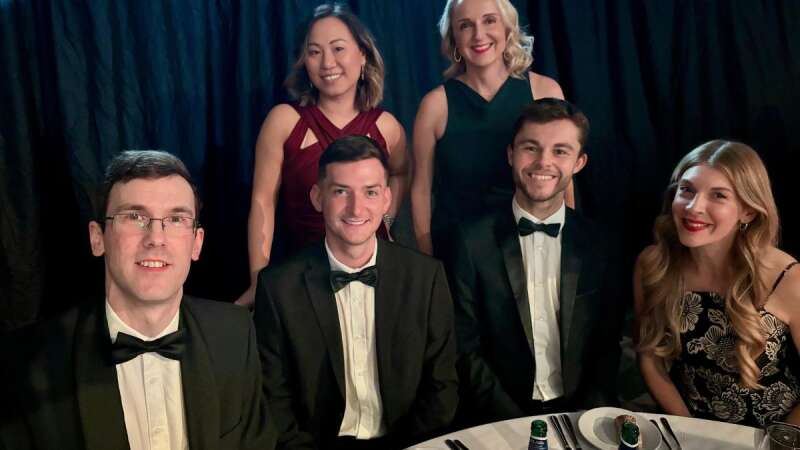
Myerson Solicitors Celebrates Double Win At British Wills and Probate Awards 2026
We are delighted to announce that we have secured two national accolades at the British Wills and Probate Awards 2026 , recognising the strength and expertise of our Private Client team. As a Top 200 UK law firm, we were proud to take home two prestigious awards at the national ceremony held on Thursday, 8th October: Probate Provider of the Year...
Read News
Solicitor Closed Down? What Happens to Your Will and How to Find It
Has the firm that drafted your Will closed down? Don’t panic! There are still ways to locate and obtain your Will. Our Wills Lawyers explain what may happen to your Will and other original documents in this situation.
Read Blog
Planning for the Future: Succession in Farming and Rural Businesses
Practical succession planning for farming families, covering business structures, Wills, trusts, land and protecting the future of the farm. Succession in farming is about much more than passing on land. It involves protecting the future of the family, the farming business and the assets that have often been built up over generations.
Read Blog
Cohabiting Couples and Inheritance: Could the Intestacy Rules Be About to Change?
The Ministry of Justice has opened a public consultation, ‘ A Fairer End to Relationships ’ , which aims to strengthen the legal rights of cohabitees within the England and Wales. Cohabiting couple families in England and Wales now account for 17.6% of all families , yet the current law still treats married and unmarried couples very differently...
Read Blog
Darren Christopherson-Smith
Solicitor
Darren joined Myerson in September 2025 as a Paralegal in the Wills, Trusts and Probate team and qualified as a Solicitor in November 2025.
Darren began his legal career after sitting his A-Levels, joining SAS Daniels LLP as a Legal Apprentice in August 2016. He qualified as a Paralegal in 2018 and started the Solicitor Apprenticeship in September 2019, which he completed in the summer of 2025. During the Solicitor Apprenticeship, Darren graduated from the University of Law with a First Class LLB in Legal Practice and Skills before taking the SQE.
Darren initially worked in Litigation before transferring to Private Client in January 2021. Since then, Darren has developed his knowledge and experience of various areas of Private Client law, including probate and estate administration, Wills, lasting powers of attorney, Court of Protection, and the registration of trusts on HMRC’s Trust Registration Service.
About Darren Christopherson-Smith